Showing posts with label world cinema. Show all posts

Monday, 24 December 2012

December Filmathon

With the horrible weather outside and an order to rest over the holidays, I've become a bit of a film junkie, reverting back to my teenage days when I watched way over 300 films a year. In the last week, I've been working my through a wide range of films of variable quality: classics, musicals, arthouse, Muppets, and a Martin McDonaghfest, and thought I'd share them on here.

Seven Psychopaths- Martin McDonagh, 2012
My most anticipated film of the year. In Bruges is one of my favourite films, and I've been waiting a long time for this second feature from Martin McDonagh. As he told IdeasTap, he's very protective of his work, and wants the finished piece to be perfect, which is why it has taken YEARS, but it was worth the wait. Clever and funny in equal measure, Seven Psychopaths also benefits from one of the most impressive ensemble casts I've seen in recent years.


Project X - Nima Nourizadeh, 2012
Apparently this is quite a famous film, but I've never heard of it before. It's the story of a teenage birthday party that gets way out of hand, told through footage supposedly taken on video camera as events unfold. not recommended for parents about to leave their kids alone!


Killer Joe - William Friedkin, 2011
When I first saw the trailer of Killer Joe, I knew I had to see it. I've never been a fan of Matthew McConaughey, but it seems that while he's been wasting his time all these years on soppy rom-coms, he's made to play a psychopathic assassin. This film is not for that faint-hearted though: from the beginning it has graphic violence, nudity, strong language, sex and extremely disturbing scenes. If you can get passed all that, it's brilliantly shocking and atmospheric.


Pitch Perfect - Jason Moore, 2012
The complete opposite of Killer Joe, Pitch Perfect is a real feel-good film, about a loner (Anna Kendrick) who begrudgingly becomes a member of her college's all-girl a cappella group and obviously finds loves, happiness and success. It's like Glee only much sillier and where you can see the happy ending coming a mile away, but lots of fun.

The Breakfast Club - John Hughes, 1985
The Breakfast Club plays a pivotal role in Pitch Perfect, so as soon as I finished watching that I had to watch this 80s classic. "Won't you, come see about me..."


The Five-Year Engagement - Nicolas Stoller, 2012
Jason Segel and Emily Blunt star as a couple whose lives keep pulling them in opposite directions in this quite average rom-com. There were some funny parts, but it's certainly not a classic, unlike....


The Apartment - Billy Wilder, 1960
Now this is how rom-coms should be. Jack Lemmon stars as mild-mannered, eager to please C. C. Baxter, who can't say no to his exploitative bosses, and Shirley MacLaine as the elevator operator he's hopelessly in love with. An absolute joy. It may be a huge cliché, but they really don't make actors like they used to. The Apartment has started me on a bit of a classics binge.


First Night - Christopher Menaul, 2010
A rich industrialist's (Richard E Grant) attempt on a production of Mozart's Cosi Fan Tutti to impress Sarah Brightman, is fraught with backstage drama as life imitates art. I've been wanting to see this film for years, since it was still in post-production and I found the trailer for it in one of my regular searching for Julian Ovenden on YouTube sessions. It took a long time to get to the cinema, and even then it didn't come out in Cardiff at all (where I was living at the time), then another age to get to DVD, but finally I got to see it. The acting is terrible and the writing is worse, loaded with clichés, but it is a lot of fun and the singing at least is really good.


2046 - Wong Kar-wai, 2004
A friend recommended this Hong Kong film and I was seduced by the very surreal trailer, which reminded me of David Lynch, but in the end all 2046 had in common with Twin Peaks was an excessive use of red curtains. It's the final part of a loose trilogy by Wong Kar-wai, which started with Days of Being Wild (1991) and In the Mood for Love (2004, widely regarded as a masterpiece). Unfortunately, I didn't know anything about either of those films before I watched 2046 and I wish I had as characters and plot points recur which would have made a lot more sense had I known about them previously. It is possible to understand the film without any prior knowledge of the other two though; nonetheless, it drags, as interactions seem drawn out, and it is overly repetitive. It's aesthetically very interesting, especially the use of green and red, and the use of music is great, but it's just not engaging enough.


Grand Hotel - Edmund Golding, 1932
The first of three Best Picture Oscar winning films I watched this week. I've been meaning to watch Grand Hotel since I first saw the musical seven years ago, but the final push was Baxter watching it in The Apartment. I know the story, and most of the dialogue, off by heart, from listening to the musical too many times, but it was a real pleasure to watch it played by such an extraordinary cast - Greta Garbo (fading prima ballerina Elizaveta Grushinskya), John Barrymore (bankrupt but loveable Baron von Gaigern), and above all Joan Crawford, who steals the show as stenographer Flaemmchen.


West Side Story - Robert Wise and Jerome Robbins, 1961
Best Picture Winner number 2. I may have watched The Balcony Scene from this years John Wilson Prom at least fifty times, plus the Glee version of WSS several times, so it was only right I went back to where it all began. Pretty much every song has been sung better somewhere else, but the aesthetic of the film is still unbeaten, especially the relationship between Natalie Wood as Maria and Richard Beymer as Tony (although since I found out he grew up to play the rather scary Ben Horne in Twin Peaks I can't look at him in the same way). I've seen many versions of Romeo and Juliet, but this is my favourite.


It's A Very Merry Muppet Christmas Movie - Kirk R. Thatcher, 2002
I love The Muppets, but this is one of the worst of their films... Within the first two minutes, I remembered having watched it before, but still sat through the whole two hours, 'cause even when they're rubbish, the Muppets still make me smile, and there are some gems here and there, especially the Moulin Scrooge scene. This film also has the bonus of a lot of Pepe the Prawn who has become one of my favourite Muppets in recent years.


Gentleman's Agreement - Elia Kazan, 1947
Best Picture Winner number 3, Gentelman's Agreement launched Gregory Peck as the star of the 'social conscious' film. He stars as Phil Skylar Green who begins telling everyone he is Jewish in order to really understand anti-Semitism and write a series of articles on it. Green is shocked by the treatment he receives, as was I as a viewer - I had no idea anti-Semitism was still so prevalent in post-war America. It's a really wonderful film which is particularly impressive in its ability to balance heavy issues with sympathetic characters and genuine entertainment.


Six Shooter - Martin McDonagh, 2004, short
Ending the week as I started it, with Martin McDonagh, and the Oscar winning short which started it all, a first taste of his trademark mixture of dark humour, wry observation and graphic violence. The whole 27 minutes is available on YouTube.


In Bruges - Martin McDonagh, 2008
And finally, we've gone full circle. I've seen In Bruges at least four times now, but it still makes me laugh out loud, and I'm still impressed by how cleverly the twists and side-plots all fit together. I also love how no-one can think of the tourist town anymore without thinking of this film: whenever anyone says they are going to/have been to Bruges, the first question is always about the alcoves.


Wednesday, 9 May 2012

Around the EU in films

Happy Europe Day! As you may have noticed, I'm a big fan of Europe, especially when it comes to culture, so I actually celebrate Europe Day. The day commemorates the Schuman Declaration of 9 May 1950 in which the then French Foreign Minister Robert Schuman proposed a form of European supranational community, leading to the creation of the European Coal and Steel Community, the ancestor of the EU.


In honour of the day, I'd like to travel through the EU through films, but I'm sad to say I don't know enough. So that's where you come in: please send me your suggestions! I'd love to end up with at least one film for each of the 27 member states.


I'll start off with a few of my favourites. Some of them are obvious choices, famous and critically acclaimed (e.g. La Dolce Vita). Others are less well known, but I love them.

France: Les Chansons d'amour (Love Songs) - Christophe Honoré (2007)

When people think French film, they'd maybe say Godard or Renoir, or more recently films like Amélie or La Haine. I am a huge fan of French cinema, old and new, but there's no director I love more (not just in France but in general) than Christophe Honoré, and his Les Chansons d'amour is my favourite film of all time. Big claim, I know, but I just love it. For starters, it's a musical, which is always going to win my favour, especially as the songs (written by Alex Beaupain) are really catchy. What I love most about it though, is that it explores so many aspects of human relationships, romantic to familial, mundane to illicit, joyful to tragic. It's an engrossing, moving and extremely true-to-life portrayal of love, loss and new beginnings. It also stars some of the best new French talent including Louis Garrel, Chiara Mastroianni and Clotilde Hesme. The trailer does not do it justice (probably because it's trying to avoid giving any plots twists away).


Germany: Metropolis - Fritz Lang (1927)
As much as I love recent German films like The Edukators, The Lives of Others and Goodbye, Lenin!, I'm going old-school for this one. Metropolis is widely regarded as one of the all-time classics and rightly so. It's one of the most creative and iconic films I've ever seen and an incredible technical achievement given when it was made. It proves you don't need words to make drama.


Ireland: Once - John Carney (2007)
A charming little musical made on a shoe-string that has taken the world by storm and has just been taken to Broadway. Staring Glen Hansard (of Irish folk band The Frames) and Czech songwriter Markéta Irglová as musicians who come together to make something beautiful. Their song Falling Slowly won the Oscar for Best Original Song (an honour slightly tarnished by the fact that Man or Mupet won this year). It's also a great film for Europe Day as it shows the benefits of supranational co-operation ;-)


Italy: La Dolce Vita - Federico Fellini (1960)
An obvious choice really. While I enjoy neo-realist classics, smush-fests like Il Postino and Cinema Paradiso, and modern films like Gomorra which show the realities of contemporary Italy, La Dolce Vita encapsulates the glamorous ideal of Rome. Plus I needed Marcello Mastroianni in here somewhere!


The Netherlands: Zwartboek (Black Book) - Paul Verhoeven (2006)
Admittedly I don't know very much about Dutch film at all (please send me recommendations!) but this exploration of Second World War Resistance is really interesting and visually impressive.


Spain: La Mala Educación (Bad Education) - Pedro Almodóvar (2004)
Pedro Almodóvar is undoubtedly the most successful and renowned Spanish film-maker and while All About My Mother is usually cited as his best film, I much prefer Bad Education. This semi-autobiographical film ties together strands that have run throughout his work, including questioning gender and sexuality norms, religious iconography and ambivalence towards the Church, and the nature of film-making. Absolutely beautiful and completely engrossing.


Sweden: Det sjunde inseglet (The Seventh Seal) - Ingmar Bergman (1957)
Another obvious choice, The Seventh Seal is the film that gave the world the iconic image of death playing chess. Beautifully made.


UK: In Bruges - Martin McDonagh
Choosing one film for th UK was always going to be a challenge, so rather than trying to find a film that is particularly representative of Britain, I've just gone with another of my favourite films. It also seems appropriate as it's set in Belgium, home of the EU. I've seen this darkly hilarious gangster film/homage to one of Belguim's biggest tourist attractions so many times and yet it still makes me laugh more than most films.


So that's eight down, only 19 to go! Please send in your suggestions and help me get around the EU in films.

Tuesday, 3 April 2012

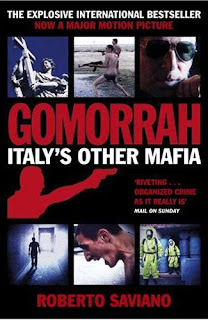
Gomorrah: the Neapolitan Mafia from page to screen

As I've not had so much to review this week, I think it's time to go back to sharing what I've been doing in class with you. In my final classes of my MA (I can't believe it's almost over already), we've been looking at Gomorrah, Roberto Saviano's denunciation of the Camorra, the Campania version of the Mafia, which became an instant hit while condemning Saviano to a life-time in hiding.


This interview with Saviano on The Culture Show (the BBC's, not mine sadly!) really highlights what a sacrifice it was for Saviano to write Gomorrah.


Our study of Gomorrah was the final part of the course on adaptation of literature to film. Gomorrah made a particularly interesting case study because when I first read it, I thought it would be absolutely impossible to turn into a film. To highlight the enormous scale of the Camorra, its all-pervasive power within Naples and the surrounding areas, and its infiltration of Italian politics and global business, the book is bursting with lists, numbers, names and facts. This has a really powerful effect but lists obviously don't work well on screen. Moreover, the aim of the book, and the film, was to counteract the glamorising of the Mafia by Hollywood films, so rather than graphic murders, we have to see the day-to-day, the slums, the toxic waste, and the constant counting of dirty money.

The adaptation cleverly turned the huge cast of characters from the book into a few protagonists who embodied the main themes of Saviano's work. While this made a more watchable film (although as Mark Kermode points out, it's still a difficult watch because there really is no-one to root for), the film had to get creative to still give a sense of the scale of the Camorra. In particular, the scenes of the slums were full of visual metaphors for the Camorra's activity and its effect on people's lives.

The scenes in the Neapolitan mass social-housing make clear just how trapped the local people are. They are constantly shown behind bars which foreshadow the prisons that many of them will end up in if they're not killed first. The use of light and dark is particularly effective, as it's always bright outside, suggesting freedom and a better future, but the people in the slums are stuck in the shadows.


In these shadows we often can't see people's faces - we know they're doing some 'shady' deals but its not clear what, just like the Camorra's business activities. This is enhanced in the film by the sound of shouting - we cannot work out what is being said but we know it's angry.


The sound and lighting creates a sense of the 'everyman', as in everyone is involved in the Camorra in one way or another. This is a key element of the book which stresses how the Camorra 'democratised' the drug trade, allowing everyone to become a dealer, even if just to a small group of friends. This point is highlighted in the brief shot of the open air drug market, where heads cannot be seen (notice the bars once again). The scene is shot from above through a child's perspective, suggesting a strong moral judgement on these activities.


We see another slum which is the same but different, suggesting the scale of the deprivation in the area, and how nothing ever changes. The tight central corridor exemplifies the lack of escape options for the residents, as there is no other way out. The slum works as a panopticon: everyone's behaviour is constantly under scrutiny, so people have no choice but to act in the way expected, in this case following the Camorra.


Finally, we see the huge scale of the housing estate which brings home just how wide-spread the problem of the Camorra is. This housing estate might once have been bright white and modern, but it has been ignored and left to decay ever since. This is emblematic of the way the people of Campania see their situation in relation to the official authorities. The government don't care about their struggles so they have to turn to the Camorra for protection and for economic growth. The small area of colour where the children play may at first suggest innocence and a brighter future, but the juxtaposition with the rest of the grey housing estate, and the Camorra guards on duty just above them remind us that their childhood will end quickly and their future is bleak.


Monday, 26 March 2012

WOW Film 2012: Amigo

John Sayles has spent a lifetime making a name for himself as an independent film-maker, so it is sad that WOW Film Festival 2012 is the first time that Amigo  has found an audience in the UK since the Londond Film Festival 2010.


Amigo is a well-crafted ensemble piece set in a Filipino garrison town as US troops are driving out the last of the Spanish and fighting the national liberation insurgents. While any historical knowledge would certainly have helped to understand the context, the large assortment of characters were interesting enough to keep me hooked. From Rafael, cabeza del barrio, whose only goal in life is to lead the people of the village well, to the rookie soldier falling for a native girl, each character is nuanced and believable.


The film makes a strong statement about power, institutions and corruption. The US troops were at first happy to fight the locals, blindly following orders, but as they got to know the village life, a struggle brewed between their morals and their obedience to authority. Particularly striking was the Spanish priest who, as the only person who can speak both English and Filipino, wields enormous power that he gleefully abuses. 


Overall, a bleak but very interesting film, well-worth watching.

WOW Film 2012: Window On Africa

With Window on Africa WOW Film Festival gives us a fascinating insight into three countries rearely seen on screen: Uganda, Ethiopia and Zambia. The event comprised three short documentary films, a live Q+A with director Carol Salter and a Skype Q+A with directors Willem Timmers and Ilja Kok.

Unearthing the Pen (dir Carol Salter)
Telling the story of a young Ugandan boy named Lochen who desperately wants to overturn the curse his ancestors put on the pen so that he can finally go to school, Unearthing the Pen is so beautifully filmed and the protagonist so engaging that I couldn't tell if it was a documentary or fiction. A sweet, non-didactic exploration of the importance of education for those who can't have it. During the Q+A, Salter said that she had really hated school and was therefore really moved by this boy who showed her how lucky she had been to have an education.

I spoke to Salter after the film:


Framing the Other (dirs. Willem Timmers, Ilja Kok)
Framing the Other documents the Mursi tribe who have become a magnet for tourists who flock to see their distinctive lip plates. The film made me very uncomfortable for many reasons. Firstly, the lip plates really freaked me! I know they're a traditional part of Mursi culture but I'm really squeamish. Mainly, however, the interaction - or lack thereof - between tourists and Mursi was horrible. The directors said during the Q+A that they had both worked as guides in Ethiopia and their disgust at the tourists inspired this film. The tourists just want to take photos of the Mursi who, wanting to make as much from this as possible, hustle them to take more photos for more money. There is no real interaction at all, and the tourists, scared by the hustling, run off withing minutes with the most limited knowledge of Mursi life. What I loved about the film though, was how the film-makers, having won the trust of the Mursi, showed the tribe as they normally are away from foreign eyes. For the Mursi it seemed a great joke to dress up and paint themselves in a manner far removed from their traditions to scam the tourists. It felt like one way that they could gain agency in their otherwise powerless situation. While the behaviour of the tourists leads the viewer to question their own actions abroad, the warmth that the Mursi bring to the film saves it from being too bleak.


Where the Water Meets the Sky (dir. David Eberts)
When Morgan Freeman starting narrating the rural life of Samfya in Northen Zambia I wondered what kind of National Geographic film we were going to get. Instead, Where the Water Meets the Sky documents the work of international volunteers from Camfed to bring together a group of women from different background and teach them the skills they need to tell their stories through film. The result is the first film ever to be produced in Zambia, the story of Penelop who had to turn to prostitution after both her parents died of AIDS. Their film is shown around the community and beyond to encourage AIDS testing and highlight the plight of orphans. It was heartwarming to see these women, who had never been able to talk publicly about their problems before, come together and create something that both gives them a real sense of achievement and benefits the whole community.


Sunday, 25 March 2012

WOW Film 2012: Tales of the Night

Tales of the Night, from award-winning French-African animator Michel Ocelot, is the most beautiful thing I've ever seen in a cinema. That might sound over-dramatic but it's true. The vibrant colours, contrasted with the silhouette figures, just completely blew me away.


Ocelot is a born story-teller. While Tales of the Night was advertised as a children's film, the simple stories it presents, and the joy the young protagonists get from crafting these stories, are just as enjoyable for adults.Whether a brave outsider saving a human sacrifice or a loyal servant discovering love with the King's daughter, each story explores love, dedication and good conquering evil. 


All together there were six stories from different backgrounds: Renaissance France, Caribbean, African, Aztec,Tibetan and a medieval European fairy tale. I was so impressed by how such different worlds were created, from the colours and patterns to the different French accents.


I can't recommend Tales of the Night enough really so I'll just let the images do the talking.


WOW Film 2012: Mysteries of Lisbon

Mysteries of Lisbon, adapted from Camilo Castelo Branco's classic 19th century novel, was the last film from acclaimed Chilean director Raúl Ruiz. At 266 minutes, it is at the very least a tempting challenge. A test of a cinema-goers endurance, their dedication to film. It has also been lauded as a visual feast and a story worthy of viewers' patience. Dave Gillam, festival director, even went so far as to say that, out of all of the films at the festival, this is the one that people will be talking about in ten years time. High praise indeed, but does Mysteries of Lisbon live up to the hype?


Mysteries of Lisbon reminded me very much of a Portuguese Les Misérables, weaving together scores of characters and disparate strands of plot that span at least sixty years. Only this story is further complicated by a complex temporality and a web of diegetic narrators. One character will tell their story which includes another character telling his story and so on. Despite the length of the film, even a brief lapse in concentration must be avoided if you want to keep track of who's who or what time period we are in. As the title suggests, the film is full of mysteries. As soon as one is solved more are introduced. I was constantly asking myself "Who? What? Why?" The desire to get to the bottom of every enigma keeps the viewer hooked. Almost all of these mysteries are solved by the end, although one or two do fall through the net. I kept waiting for answers that never came.


Beyond the need to know who people are and how they are linked to the story (we know they must be otherwise they wouldn't be in the film, but when first introduced they seem far removed), the strong central characters keep the viewer engrossed. At the heart of the story is Padre Dinis (played by Adriano Luz), who  somehow has a connection with every character. This aspect of the plot is highly unbelievable, yet a voice-over asserts (ironically?) that "In life there are events and coincidences of such extravagance that no novelist would ever dare to invent them". Finding lost parents is a recurring motif in the film, posing interesting questions about identity, as does the fact that several characters have many false names and past lives. Similarly, the instability of social status is highlighted through the character's trajectories. The recurring motif of a puppet theatre suggests that everyone is just playing a role, putting on a persona.


In short, Mysteries of Lisbon gives a viewer a lot of food for thought. But it also feeds our eyes, with beautiful photography and many sumptuous period costumes and interiors. Ruiz's style of filming through the eyes of gossiping servants, peering through curtains or doors left ajar, also makes for very interesting visuals.

My only real criticism is that I felt disappointed by the ending. Four and a half hours deserves a real climax and I felt short-changed, like it fizzled out. Watching Mysteries of Lisbon it struck me that if it were a TV drama, the meandering, large cast of characters and eventual denouement would have seemed more appropriate. I later discovered that it was in fact turned into a six-part mini-series. But at least this way we get a strange sense of achievement for making it through the whole, epic story in one go!

Friday, 23 March 2012

WOW Film 2012: Where Do We Go Now?

The opening night of WOW Film 2012 then (Turksib was just an appetiser), and what a way to start! Where Do We Go Now? directed by Nadine Labaki is simultaneously a thought-provoking view of the religious conflict in Lebanon and a genuinely entertaining film.


The film opens with a beautifully choreographed scene of a funeral procession with a poetic voice-over introducing the parable. Ladanki's primary occupation as a music video director shines through from this beginning, as well as scenes throughout the film where music and movement are weaved into the plot. It briefly seems like Where Do We Go Now? will just be a musical rom-com, focused on the potential relationship between Christian Amal (played by Ladanki herself) and Muslim Rabih, who we see flirting and dreaming of romance. But the film soon became so much more. Telling the story of a mythical village, linked to the outside world only by a precarious bridge and a weak TV signal, where Christians and Muslims live in harmony, Where Do We Go Now? highlights the fragility of peace and the futility of conflict. What seems an oasis of peace is clearly haunted by the recent memory of civil war, in which many husbands, sons and fathers lost their lives. The women are desperate to avoid further conflict, but their best efforts cannot counteract the weight of prejudice. Once word of the sectarian violence outside reaches the villagers, they seem almost brainwashed into believing that the two sides are natural enemies, and it only takes a few chance occurrences to rekindle the violent feud.

Yet just when you start to feel really down, there is totally unexpected humour. I don't want to spoil the surprise, but the methods the women take to distract the men from their conflict create both absurd laugh-out-loud situations and really heart-warming moments. It is a real pleasure to find a film that can deal with such a sensitive, difficult issue and still create such joy. Not only that, but its extremely well written and acted. I found myself caring deeply for the characters straight away. Every time the young protagonists Roukoz and Nassim headed out of the village, I was panicking that something would happen to them. The dedication that the women have to holding their community together makes them extremely likeable, so we cheer on all their schemes and wish that they can maintain peace.

The end of Where Do We Go Now? is full of hope. If we just put aside differences like religion and remember we are equal neighbours, we can live happily in harmony. The message is clear and simple, but sadly so often ignored in real life.

Sunday, 18 March 2012

WOWFilm2012: Turksib

With it's opening film, Turksib, WOW Film Festival (@wowfilm) is certainly living up to its name.


Turksib is a 1928 black-and-white documentary. Directed by Victor Turin with a stunning sense of rhythm, it depicts the incredibly harsh conditions of Turkestan and Sibera, and the race to build a train-line between the two that will alleviate their difficulties. It's a very Soviet celebration of the triumph of man and machine over nature. Turksib became world-famous and highly influential, and almost a century later remains a captivating visual experience.


As a special treat, this showing of Turksib (and the following showings in the WOW Festival around Wales) had live musical accompaniment, composed and performed by Bronnt Idustries Kapital. The ethereal music compliments the images so perfectly that it's impossible to imagine the film without it. Altogether a truly hypnotising experience.


WOW stands for Wales One World, a festival which brings the very best cinema from around the world to cinemas across Wales. Now in its 11th year, the festival, directed by David Gillam, is searching increasingly wide for films, introducing works from Lebanon, Mongolia and Africa alongside films from Europe, Latin America and Japan which are now more common in UK cinemas than when the festival began. WOW runs from 22-25 March at Chapter Arts Centre in Cardiff, and continues across Wales until 11 April. The full programme is available at http://www.wowfilmfestival.com/2012-programme/ If you can't make it to the festival, I'll be watching as many as I can and reviewing them here.

Saturday, 11 February 2012

Ffresh Festival Part 3: Ficcion 1

Day two of Ffresh Festival for me starts with Ficcion 1, a collection of international short fiction films. This was a bit of a mixed bag, with films differing greatly both in terms of theme and quality.

Enmesh (Ambitious) - Ainur Askarov -Russia
The story of a young child in a rural village who dreams of stardom and lives for the weekly screening of a Bollywood film in the village hall. The film nicely juxtaposes daily routine and escapist dreams. The subtitles were such bad quality that we couldn't read them, but it is a testament to the film-makers that I still felt moved by the story without understanding any words.


Last Train (Ostatni pociąg) - Weronika Tofilska - Poland 
My favourite of this batch of films, a high-quality production and engrossing, subtly moving story. Anthony's life is miserable - monotony of work, unappealing wife, drab surroundings - and only brightened by memories of his first love (the juxtaposition of the grey concrete of real life and the vibrant colour of memory is particularly effective). One of the best things about  Henryk Niebudek has a face so full of character that he wouldn't need to say anything for you to identify with him. The whole film is available below:


Beyond - Gary Sofarelli -Australia (Sydney Film School)
A very atmospheric film that verbalises nothing, implying its meaning instead through cuts between a man trying to swim the entire length of a pool without breathing and images of a happy family. Visually impressive, this film won the Best International Fiction award.


Essai de Narration incoherent(e) - AUNVEL# -Germany (Hochschule für Film und Fernschem Potsdam)
Incoherent is certainly the right word for this film, which just left me bored. It felt like it was trying far too hard to be clever or unusual. I couldn't tell whether only subtitling half of the dialogue was a fault or a stylistic device, but I assume the later. Formed of cuts between mundane conversations between two friends, an angry drunk in a bar and an otherworldy woman who licks mud/oil/something disgusting off herself and later suffers excessively gory violence. Not recommended!

Pictures from www.ffreshfest.com