Showing posts with label latin american. Show all posts

Tuesday, 17 June 2014

Making connections: Latin American literature in China

(Originally posted 4 February 2014)
This academic year I have been co-organising our departmental seminars (www.splas-seminars.com) with a fellow Tianai seminar 1PhD candidate. These seminars give current students a chance to try out their research in an informal setting, usually before a big scary conference, and get constructive feedback. Other weeks we get a external speakers in to share their expertise. I love the opportunity these seminars afford to learn about other aspects of my field that I never usually encounter, but this week’s was a particular joy.
Last Wednesday we welcomed Tianai Wang to the department to talk about the influence of Spanish language literature in translation in her native China. Tianai has recently graduated from the MA in Comparative Literature here at KCL so her presentation was also a homecoming, as staff were certainly very happy to see her back.
Tianai seminar 2
What I most enjoyed was the opportunity to learn about a culture that I know shamefully little about and the surprise of how much Latin American literature (my own speciality) has influenced contemporary Chinese writers. Mo Yan, for example, was praised for his ‘hallucinatory realism’ when awarded his Noble Prize in 2012 in much the same way that Gabriel Garcia Márquez was for his ‘magical realism’ upon winning the prize in 1982. Tianai’s presentation therefore gave me a new way of thinking about literature that I am very familiar with, as well as an entrance to a whole new literary world.

Tomorrow’s seminar is Dr Juliet Perkin’s talking about translating the 15th century chronicles of Fernao Lopes, worlds away from contemporary Chinese literature, but another topic that I look forward to learning more about.

SPLAS Migration and Exile Conference

I’ll admit it, I’m a conference junkie. I’ve been to three already this year. The Narratives of Migration and Exile conference held at King’s last week was my favourite yet, and not just because I’m biased!
It was a real pleasure to hear such an interesting collection of papers from postgraduates and early career researchers who had travelled from across the UK, Europe and North America to join us in discussing topics like home, belonging and identity, topics that get to the heart of who we are and how we relate to people and places. I’d like to share some of my highlights in this post:
  • The screening of Un Franco, 14 Pesetas was a great success – it drew a crowd and lots of laughs. It was great to speak to members of the London Spanish Film Club after who said the film reflected many of their real-life experiences and concerns as migrants.
  • I got to try out some new ideas in my paper and received some very useful, thought-provoking questions, and also got to chair a panel (great sense of power!)
  • Prof. Slyvia Molloy delivering her keynote
    Two fascinating keynotes from Prof. Sylvia Molloy, NYU, and Dr Juan Carlos Velasco, CSIC. Getting such a big name as Prof. Molloy was a real coup for King’s (thanks to the dedication of the organisers), and her keynote was inspiring. She spoke of how home does not exist until it is left behind and created in the imagination, making it impossible to return.You can now listen to podcasts of both keynotes here.

Young Researchers Conference in Madrid

Being a PhD student has many perks, but perhaps one of the best is being funded (thank you very much to the School of Arts and Humanities’ Small Grants for Research Students scheme!) to travel abroad for research and conferences. Last week, I travelled to Madrid for my first conference abroad: the ‘First Colloquium of Young Researchers in Latin American Literature’ at the Universidad Complutense, Madrid. Between enjoying the sunshine, visiting the Reina Sofia gallery and eating about 50 different types of ham, I had an amazing time meeting other young researchers who shared my exact interests, building my network and learning so much from them. 
When the time for my presentation came, I was extremely nervous as it’s the first time that I’ve had to present in Spanish in front of an almost entirely Spanish-speaking crowd. Then when Eduardo Sánchez Rugeles, the author of the book I was about to talk about (Blue Label/Etiqueta Azul) walked in, nerves turned to terror, as I panicked that he would hate everything I said. Thankfully, the presentation went very well and he seemed to really enjoy it – more than anything he was shocked and grateful that someone from England would care so much about his work! He had also very kindly brought me a copy of his latest book, which I had desperately wanted for months.
Later that evening, another of my favourite authors, Juan Carlos Méndez Guédez, came to finish the conference with a reading from his latest book and a Q+A session. I got a free book from him too, as well as a chance to discuss his writing and my translations of his work.
So I returned to England with two books, lots of new Latin American literature enthusiast friends, key insights for my research and even a bit of a tan – bring on the next conference!

Thursday, 27 September 2012

Day Two @ KCL - Departmental Induction

Back to King's again today for my Departmental Induction, and finally a chance to meet the rest of the Spanish, Portuguese and Latin American Studies postgraduates. There are seven of us starting PhDs, which is about half the SPLAS research students now, as many of the older students have just finished. I met four of the others today, as well as the five new Masters students and many of the staff.

One of my main reasons for choosing King's was that the department seemed so welcoming, supportive and friendly, and I definitely got a taste of that today. The lecturers completely put our minds at rest after the 'Efficient Researcher' booklet we received yesterday had terrified us all by suggesting we won't have a moment free for fun and will be horribly stressed until we finally retire. That may be true of scientists in their labs, but it seems like in SPLAS at least we know how to enjoy ourselves.


With that in mind, I must recommend the Arts and Humanities Festival, from 13-27 October at KCL (also visit their fascinating blog). The festival brings together academics and artists from across all the Arts and Humanities disciplines to share their work with the wider public in interactive ways along the theme of Metamorphoses. This can be everything from adaptations of a play to social change in the Middle East, as well as a particular focus on how the Arts and Humanities are changing in twenty-first century academia. Unfortunately, while I'd written all sorts of events in my diary, I hadn't actually thought to book them, so many are already booked out. There are still lots intriguing events available though - I'm particularly interested in the Digital Humanities Pecha Kucha and Metamorphoses and Languages - so book quickly a ahfest2012.eventbrite.co.uk. Plus don't miss the SPLAS showcase on 22 October to learn all about what us research students are up to!

There seems to be an incredible range of topics studied within my department, which is another of the factors  that drew me to King's. Just from the people I met today, there is a student investigating music in Lusophone Africa (Cape Verde and Mozambique), another looking at the Brazilian lyrical novel, another analysing changes in representations of the family in Argentina, Chile and Uruguay, and another focusing on the translation of Spanish plays into English. I can't wait to learn more about their subjects as well as my own.

Maughan Library on Chancery Lane
After meeting the department, I made a brief visit to the Maughan Library which struck me as exactly how a library should be. I'm not sure how it compares to other university libraries in terms of the number of books available, but the setting is magnificent. Sadly the Venezuelan literature section is still only about half a shelf though!
The spectacular Humanities reading room.
There is now only one more afternoon of inductions to go, on Tuesday, and then I'll be a fully fledged research student. Whoo!

Tuesday, 15 May 2012

Carlos Fuentes - master of Mexican literature

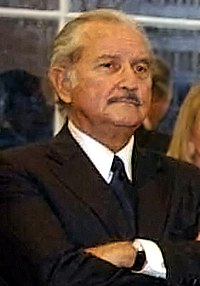
Today, at age 83, Mexican writer Carlos Fuentes sadly passed away. He will be remembered as one of the greatest Latin American authors of all time, working tirelessly until the end on novels, short stories and essays. I sadly haven't read anywhere near enough of Fuentes' vast oeuvre, but what I have read I can highly recommend.


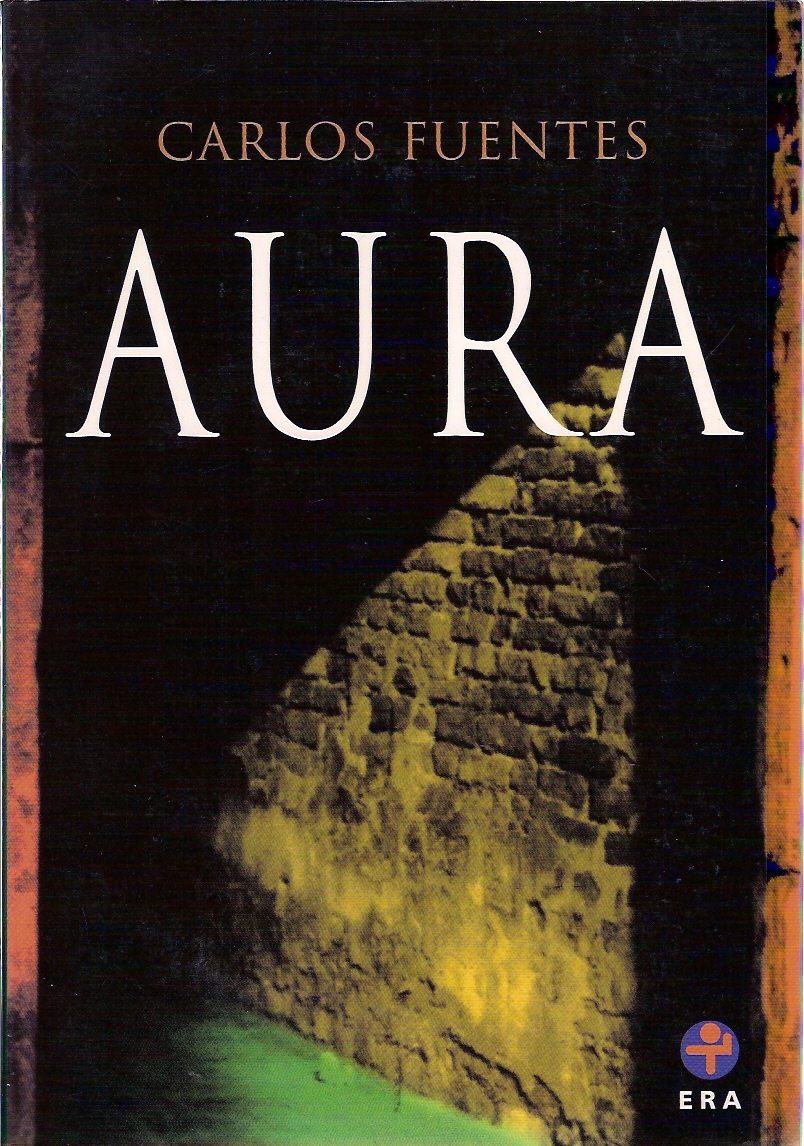
Aura (1962)
My first experience of Fuentes was in our second year Introduction to Latin American Culture course, when Aura was one of the set texts. At just 62 pages, this short novel is considered one of the most important not just of Fuentes' work, but of modern literature in general. I have to admit, we were all quite thrown by it at first; it messes with your mind, and that's why it's so powerful. Fuentes creates a Gothic, claustrophobic and downright freaky atmosphere throughout the novel. It's one of the few examples of a novel written in the second person (Michel Butor's La Modification, which we also had to study, is another key example), placing the reader in the place of the main character and asking just who is narrating. Moreover, it mixes the present and future tense, making you lose any sense of time. This stylistic experimentation, beyond breaking down definitions of what a novel should be, reflect the main concerns of the story: the passing of time and fading of youth and beauty (an allegory on the Partido Revolucionario Institutional who having ruled since 1929 had long lost any revolutionary ambition), and the search for identity in contemporary Mexican society. It won't take you long to read and you won't regret it.


La Muerte de Artemio Cruz/The Death of Artemio Cruz (1962)
The Death of Artemio Cruz is a lot longer than Aura and more epic, covering the life of Artemio Cruz, from his youth in the Mexican Revolution to his long and painful death as an old and very powerful man. Certain experimental elements from Aura remain though, especially as Artemio becomes increasingly delirious. It has also considered to be, out of all of Fuentes' novels, the one which most successfully captures the questioning of Mexican identity. Again, the PRI come under fire, as do the shallow bourgeoisie encapsulated by Artemio's wife. At the same time, it is a deeply personal story of Artemio's history and relationships. Fuentes was a master of blending the personal and the political/sociological. 


Todas Las Familias Felices/Happy Families (2006)
Fuentes' penultimate novel takes its name from the opening lines of Ana Karenina: "Happy families are all alike; every unhappy family is unhappy in its own way." It's a collection of short stories about dysfunctional families, from a wife who suffers her husband's sadism because she still loves him, to a daughter who prefers to live in the online world than have any human contact. In between each story is a 'Coro', like a lyrical poem related to the story, reflecting traditional oral culture. Through this collection of unhappy families, Fuentes simultaneously creates engrossing, multi-dimensional individual characters and paints a picture of contemporary Mexican society.


Thursday, 19 January 2012

Los Alegres Desahuciados

I feel really bad about not having written very much lately, but with exams coming up I've spent most of my time reading text books about Discourse or Orientalism. Once the exams are over I might well incorporate those themes into some articles, but for now, here's some thoughts on the one book I've read this week that has nothing to do with exams, Los alegres desahuciados (The Happy Hopeless) by Andrés Mariño-Palacio (1948).


I read this book in a day shortly after having finished Blue of Noon and promptly lost the will to live. It's not that it's badly written - quite the opposite - but there's only so much misery I can take. It is nonetheless a very important novel in the history of Venezuelan literature, and therefore worthy of attention.

So, back to the beginning. Mariño-Palacio was a prodigious talent. At 19 he was already writing literary criticism for a national newspaper, the darling of the Caracas literary avant-garde. He wrote Los alegres desahuciados at 21, as well as Batalla hacia la aurora (Battle to Dawn), which was noto  published until ten years later, and then rapidly fell into madness, from which he would suffer until his premature death in 1966. All of his genius is evident in LAD, but so is the encroaching madness, which is what makes it such upsetting reading.


LAD is not so much a story (very little actually happens) as a portrait of a young, rich, Venezuelan intelligentsia, Mariño-Palacio's people, far removed from the 'typical' Venezuelan's portrayed in the national narratives that abounded during the Pérez Jiménez dictatorship of the time. There's Abigaíl, who sees casual wickedness as the only release from the mundaneness of his bourgeois life; Vivian, who lives only for pleasure; Lombardo, a 'sensitive soul' in love with an older woman and yet sleeping with Malva, who has many other falderillos (literally men who go from skirt to skirt); Zoilo, who gives off the suicide vibe to anyone who meets him and wants to be 'the most beautiful corpse ever seen'.

So you can see why it's not the most fun reading! But it is important. Why? It is one of the earliest examples in Venezuelan literature of a novel that makes no attempt to present an image of the nation, and certainly not a positive image, an image that unites the people. Instead, the characters are at best morally ambiguous, at worst utterly reprehensible. I get the impression that Mariño-Palacio is presenting himself and his people to the world, showing that the Venezuelan population is much more multifaceted, more complicated than the image of the nation created through traditional 'identity fables' (as Ludmer calls them), and that literature can and should be used to create a detailed psychological profile of a few individuals. The novel is also littered with literary references, sharp changes from third person to first person narrative and self-deprecating references to Mariño-Palacio himself, all of which makes for a very rewarding literary analysis experience.

However, one thing that most intrigues me about this novel is that the version I read was republished in 2004 by Monte Avila, the official publishing house of the Venezuelan government, as part of its Basic Library of Venezuelan Authors. It seemed very strange to me that such a nationalist government, a socialist government, a government which promotes the idea of solidarity between all the different races that make up the countries population, would promote in this way a novel about rich white people in a world of their own (the only experience of other races is when Abigaíl violently attacks a 'negro' who doesn't even get a name, just because he's getting on his nerves). I can only guess that as Mariño-Palacio is recognised as an exemplary literary talent, his promotion as Venezuelan lends weight to the country's cultural credentials. I will read more though and maybe come up with some better answers.

Wednesday, 14 December 2011

No more 'Latin American' literature pleads Iwasaki

"Si Messi no ocupa plaza de extranjero en la Liga, nosotros no deberíamos hacerlo en la literatura"
"If Messi is not a foreigner in la Liga, then we shouldn't be foreigners in literature"
- Fernando Iwasaki

My new Twitter obsession is already proving itself useful for my academic life, as I just saw this article tweeted by Chirinos, Iwasaki pide ´acabar´ con la literatura latinoamericana from the Alicante newspaper Diario Información. The main point of the article is that at a conference on challenges in Latin American narrative in Alicante today (which I wish I'd been at!) Peruvian author Fernando Iwasaki argued that now is the time to stop talking about 'Latin American' literature and instead consider it just as 'Spanish language' literature. He maintains that there is little difference between him and authors from the Iberian peninsular, especially in terms of literary influences.

As I want to study Latin American literature, I wonder what Iwasaki would make of that. I certainly agree that we should not believe that Latin American literature can be narrowly defined, nor that it is completely incommensurable with literature from the peninsular. In fact, in my work I will argue that old European ideas of what Latin America should be - 'identity fables' that create national imaginaries, painting a picture of Latin America as exotic, magical, fundamentally different from Europe - are completely false and outdated. We cannot make a value judgement about a text on the provenance of its author, but only on the quality of the work. Nor is Latin America one homogeneous lump - each country, and within that regions, generations, classes, subcultures... - all have their own specificities which deserve to be explored.

 Nonetheless, I don't think that any author can ever completely cut themselves off from their country. Somewhere, even if unconsciously, lived experiences, political, cultural and societal differences, even different geographies must have some affect. While I don't believe in essentialist, innate differences, I do believe that we cannot help internalising certain social constructions. If I were to write a novel, on no matter what subject, something of my English upbringing and mores would seep through, distinguishing it from a novel by someone from the States or Canada or Australia, and in the same way I think not everyone writing in Spanish can be lumped into 'hispanophone literature'.