Showing posts with label LSE literary festival. Show all posts

Tuesday, 17 June 2014

A Typical Friday?

(Originally posted 8 March 2013)
Life as a PhD student can be unpredictable. Of course there’s a certain amount of reading and note-taking that forms the basis of daily life, but not having to go to class and a distinct lack of deadlines (except for that big one looming in the distance) means that I can structure my research time around whatever events I want to attend.
Last Friday is a great example of just how diverse a day in the life of a PhD student can be. It began with my first trip into LSE for their ‘Branching Out’ Literature Festival and a talk by leading historian Professor David Abulafia based on his book The Great Sea: A human history of the Mediterranean. Professor Abulafia presented a history of the Mediterranean from 22000BC to 2010 that focuses on the sea itself: naval conflicts, trade, and migration. “I like people getting on ships” he joked. I particularly appreciated Professor Abulafia’s dedication to bringing history to a popular audience:
“Historians should try to reach a wider audience.There is too much pressure from the REF (the dreaded measure of research output) to publish monographs for half a dozen people”.
After a free lunch from the Hari Krishnas outside LSE (top tip for students on a budget), I headed to Chancery Lane to spend several hours power-reading (like power-walking) in the Maughan Library café – I find it easier to concentrate there than in the main body of the library where everyone is stressing. Just when I was craving chocolate but determined not to move until I finished my book, a very kind gentlemen who works in the café gave me a free Kit Kat on his way out to “reward me for studying so hard”. Made my day!
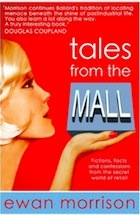
Book finished, it was back to LSE for The Art of Parodies, where biographer, critic and novelist D.J. Taylor, political cartoonist Martin Rowson and author Ewan Morrison had a passionate debate about what parodies are, whether they matter, and how we should judge them. I particularly enjoyed Ewan’s presentation about how parody has become obsolete in a “world of domestic parodists”, featuring some terrible YouTube clips. You can read all about it on my personal blog.
Amused and enlightened, I ran back to King’s Student Union for the Brazilian Dance Carnival Marathon where members and friends of King’s Brazilian and Portuguese Society danced for 8 hours through the night to raise money for the ABC Trust.
Picture from the Brazilian and Portuguese Society.
From learning about the Mediterranean to dancing the Macarena – just a normal day in PhD life!

Friday, 8 March 2013

The Art of Parodies

From political cartoons to YouTube tributes, we are constantly surrounded by parodies. But what do they do? Are they a sign of derision or affection? On Friday 1 March, LSE's 'Branching Out' Literary Festival brought together three experts with very different attitudes to discuss these questions: biographer, critic and novelist D J Taylor, cartoonist Martin Rowson and author Ewan Morrison. The result was a very lively and thought-provoking debate. Here are some of the main points from each speaker:

D J Taylor
David Taylor began his presentation reading from a short literary parody of his own, gently mocking the tropes of A S Byatt's work, to insist that parody is not disparaging.He insisted he was a big fan of Byatt, proving the old adage 'Imitation is the sincerest form of flattery'. For him, parody is a kind of authentication as it means at least someone has taken an interest in your work. It is also a vehicle for literary criticism, allowing critics to highlight key stylistic aspects of texts while having fun at the same time.

Read more of DJ Taylor's thoughts on parody and his top 10 literary parodies in this Guardian article.

Martin Rowson
Named 'Cartoon Laureate' by Ken Livingston, Martin Rowson is one of Britain's most successful political cartoonists. His presentation described political cartoons as both a parody of people and of iconic images to create the humour we need to help us survive. Starting with a musing on scatological humour, Martin claimed "If we didn't laugh, we would go mad at the horror at the stuff that falls out of our bodies on a daily basis". It's the same for politics, he adds, we need humour to cope with the ineptitude of politicians. 
Politicians too turn themselves into parodies of themselves in order to become recognisable. Martin has many stories of politicians and other notables (such as Charles Saatchi) who relish the attention of cartoonists as they ensure that they remain in the public eye. In contrast to David's assertion that parody is flattery, Martin uses parody as explicit criticism. Outside of politics, Martin has published a few graphic novel adaptations of classic works, notably T S Elliott's The Wasteland, which he calls a "truly terrible poem". One panel features Eeyore's corpse being pulled out of the river to 'celebrate' Winnie the Pooh (published around the same time as The Wasteland and Ulysses) as "the third pillar of modernism".


Ewan Morrison
Opening with a horrible Star Wars/Somebody That I Used to Know YouTube clip, one of the many thousands that appear when you search for 'parody', author Ewan Morrison set out to convince us that parody has gone too far in the digital age and lost any power it had ever had. "Parody is an overly familiar form and no longer effective". The problem, as he sees it, is that "everybody has an abundance of spare time". People take to the Internet to create mash-ups or fan-fic rather than interacting constructively with the rest of the world, and as a result "mass media is just talking to itself", like Twilight breading Fifty Shades of Grey. Where parody may once have combined the humour and political drive that Martin Rowson suggests, today they have "fallen away". 

"We are becoming a world of domestic parodists, spending our vital forces parodying and not doing anything in the real world".

From political cartoons to South Park, if we laugh at everything indiscriminantly then parody becomes obsolete, no longer a political tool but mere entertainment. Citing David Foster Wallace, Ewan insisted that we must "go back to being sincere". "We should stop thinking politics is funny. It's not. The cathartic function of parody is a problem". 

As you can imagine, David and Martin were quick to defend the types of parodies they work with, but there was unanimous agreement that this "domestic parodying" is unproductive and, often, frankly terrible. This left all sorts of questions discussed but unresolved: should parody be judged on its aesthetic quality? Its ability to make us laugh? Its political effect? Is there any point to parody any more? 

The event should hopefully be released as a podcast. Stay tuned to LSE's podcast page.