Monday, 22 April 2013

A Chorus Line - London Revival

For a long time now, my friend Zoe and I have been saying we should make the most of living in London by going to the West End one night and just asking for day tickets at every theatre we come across until we succeed. On Wednesday, we finally took up the challenge.

The quiet before the storm of tourists at The Book of Mormon
First stop was The Book of Mormon, for their ticket lottery. Two and a half hours before the show starts, you can enter a ballot for up to two front of stalls tickets for £20 each. Unfortunately, at least 100 other people had the same idea (it helps that the Prince of Wales theatre is directly between Piccadilly Circus and Leicester Square and - just like real Mormons - they send Elders out to recruit people). Undeterred, I ran down Regent St to the London Palladium where A Chorus Line is having its first major London revival since it opened here in 1976. I'd been meaning to see the show since it opened in February, and was extremely happy to find front of stalls day tickets for just £19.50 each.


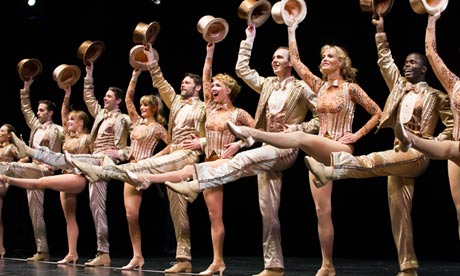
As regular readers will know, I'm fascinated by dance, which is one of the major draws of A Chorus Line. As you would expect from a show about dancers, the dancing is spectacular, so intensely physical it left me in awe of the performers strength and stamina. It was a real joy to see these iconic dance pieces performed by some of the most talented performers in the West End at the moment, including John Partridge (who despite being more commonly known as an Eastenders heart-throb has been staring in musicals since he was just 16) as director-choreographer Zach, Scarlett Strallen as down-on-her-luck but still desperate to dance Cassie, and Leigh Zimmerman, Olivier nominated for her role as the ageing but brazen Sheila.


However, A Chorus Line is more than just dance. Directed by original choreographer Bob Avian, the revival stays true to the unique genius of Michael Bennett's original production. A character piece inspired by interviews with real-life chorus members, the show introduces each of the auditionees for a spot in the chorus of an unnamed musical through a skilful weaving together of speech, song, dance, movement and lighting that results in 15 minute long pieces like 'Hello Twelve, Hello Thirteen, Hello Love' which revolutionised the shape of Broadway productions back in the 70s. The result is a frenetic and constantly engaging show, which slows only for the musically stand out number What I Did For Love, beautifully sung by Victoria Hamilton-Barritt as Diana, before culminating in the show-stopping, and incredibly sparkly, One (Singular Senstation). I left with a huge smile on my face and the urge to dance my way back down Regent St.


A Chorus Line is currently booking at the London Palladium until January 2014. Find out more at http://www.achoruslinelondon.com/

Integrating Knowledge - A King's Cultural Institute and Central St Martin's Collaboration

As a firm believer in the importance of public engagement for academia, I jumped at the chance to be involved in the Integrating Knowledge exhibition, even if only counting visitors and handing out information packs!

Integrating Knowledge is a collaboration between King's Cultural Institute and Central St Martin's to present research to the public in innovative and exciting ways. The project, curated by Caroline Sipos, paired students of MA Communication Design with academics and PhD students in Geography, Anatomy, English and Law to find ways to express academic research through videos, installations and interactive presentations. 

The exhibition covers topics as diverse as the Argentine Dirty War to neuroscience, while the theme of place/space runs through the exhibition in pieces about gentrification, regeneration, and the difference between public and private.

One of my favourite pieces is Taco-trification by Eunjung Ahn, Michelle  Dwyer, Ferdinand Freiler and Wenquing Yu, based on the work of Juliet Kahne from the Department of Geography. Through a short stop-motion film, they illustrate the gentrification of Downtown Los Angeles through tacos, which have gone from a cheap staple for local people to an overpriced trend that only the yuppies can afford.

I also loved Handwritten Waves by Mariane Assous-Plunian, Mairead Gillespie, Julia Stubenboeck and Dusan Tomic, inspired by Kate Symondson's deconstruction of Virginia Woolf's The Waves. They covered a whole wall of the gallery with extracts from Woolf's text, each handwritten by a different person, and created six books, collecting the handwritten pieces that represent the subjective experiences of each of the six main characters. Absolutely stunning.

Certainly the most ambitious piece of the whole exhibition is Howbrain by Shesley Crustna, Hoc Ling Duong, Timothy Klofski and Apolline Saillard, presenting research by neuroscientist Prof. Jon Clarke into the functioning of brain cells. Visitors can interact with the piece by stepping on pads on the floor which control the projection, choosing between research on the sub-cellular level, the cellular level and aspirations of future research. 

Overall, the exhibition achieves exactly what is hoped from a collaboration between artists and academics, engaging audiences on both an aesthetic and an intellectual level. In the three days I spent working there, visitors frequently expressed how much they'd learnt from the show, while others just enjoyed the beauty of the installations and videos. I hope to see more collaborations like this soon, as its great to see research inspiring people beyond classrooms and academic journals.

Integrating Knowledge runs until 28 April at Inigo Rooms in the East Wing of Somerset House, and is absolutely free. 

Tuesday, 9 April 2013

Urban Art Adventure + Dan Kitchener Tokyo Neon Opening

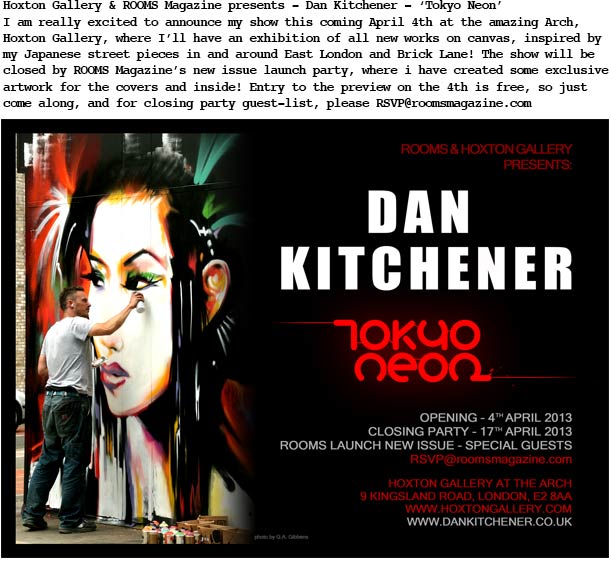
When I was in Sixth Form, Hoxton and Shoreditch were home to my favourite places to go out, like The Old Blue Last where I flailed to the many unknown indie bands I used to follow. Six years have passed since I was last there, and in that time the area has become the urban art centre of London. Thankfully, my Dad knows his way around and gave me a tour on Thursday that culminated in the opening of artist Dan Kitchener's Tokyo Neon solo show at the Hoxton Gallery.

Our first mission was to visit The Brick Lane Gallery to make an offer on this Basquiat inspired piece by Per Andresen, called Usuaul Problem. We're both huge Basquiat fans, and know that this is the closest we'll get to owning an original. Despite a disagreement with the woman in the gallery about the line between rip-off and homage, I'm happy to say this will soon be hanging on Dad's wall.


On our way to the gallery, Dad took me past some of the best spots for graffiti, including Cargo, home to an original Banksy, so valuable now that has to be protected behind perspex. I appreciated the yellow sock-puppety creature next to it.


On the other side of the Banksy at Cargo is this awesome fish mural. It's a shame you can't see from this picture, but I loved how while most of the picture is very realist, the nude in the middle has a smiley face that looks more like an Ecstasy tablet.


We wandered past countless other murals on our walk through Shoreditch, including this Brazilian scene near the old abandoned Shoreditch station.


I enjoyed the bright colours and cute characters of this mural by Malarky.

Then it was off to Hoxton Gallery for Dan Kitchener's Tokyo Neon, which housed a collection of spray-can paintings elebrating the beauty of neon reflections. The opening night seemed very popular and one of the paintings sold within the first 15 minutes!


Dad's friend, Andy Crosbie, is a real urban art connoisseur and long-term supporter of Kitchener. I'm very grateful to him for these photographs of two of the most striking pieces, which are far better than any I could have taken. Like Dan himself, I prefer the more abstract pictures, like the top one, but the more figurative second picture, going for £3500, seemed to be the big draw.


Tokyo Neon runs until 17 April at Hoxton Gallery.

Tuesday, 2 April 2013

Once - London Opening Night

I don't know you but I want you all the more for that... 
- Falling Slowly, Glen Hansard and Markéta Irglová


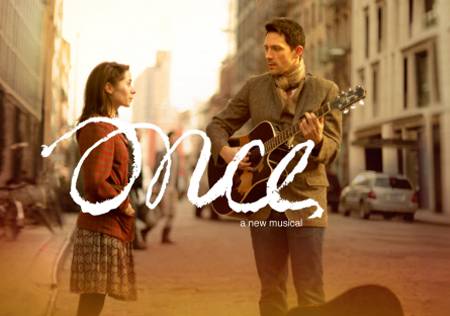
Once began life in 2006 as John Carney's small indie film, staring Glen Hansard and Markéta Irglová, made in Dublin for $160,000. It went on to make nearly $21 million at the box office, and win an Oscar for Best Original Song for Falling Slowly. This unprecedented success led to a Broadway musical adaptation by Enda Walsh, which opened at the end of 2011 and won 8 Tony Awards. Now Once comes to London, and I was lucky enough to attend the opening night of previews.

Once is the story of an extremely talented but disillusioned Irish musician who gets a new leash of life after a chance encounter with a Czech piano player. Together they gather an unlikely gang of misfits to make music, while romance bubbles away under the surface. Walsh has rounded out the story in bringing it to the stage and added a large dose of humour, but the feel of the original, a very true and delicate love story without the clichés, has retained all its charm.

The Broadway cast at the 2012 Tony's.

In moving from screen to stage, Once hasn't given in to the trappings of a typical musical, but instead kept the beautiful music by Glen Hansard and Markéta Irglova that was at the heart of the film, becoming the first ever folk musical (that I know of anyway). It's a high energy show, but instead of chorus lines and high kicks the excitement comes from instruments being played live on stage, complete with lots of stomping. Once must have been extremely difficult to cast as everyone must both be able to act and to play typical folk instruments. At the heart of Once is Declan Bennett as the unnamed Guy, a singer-songwriter himself, whose deep and powerful voice is the focal point of the show. It's no surprise that the part has no understudy, without an incredible voice at its center, the show would not work.

Combining the simple, unconventional yet deeply moving story and beautiful music of the original film, with the joy of watching live performances, Once has an incredibly wide appeal and will no doubt enjoy as much success here as it does across the pond. As soon as the first performance finished, the whole crowd jumped up into a well-deserved standing ovation, and it was really touching to see how moved the cast were by this initial response. I predict a similar reaction every night.

To find out more about Once and book tickets, visit www.oncemusical.co.uk

Monday, 11 March 2013

Matilda the Musical

Despite the many accolades and critical acclaim it has garnered, Matilda the Musical had never quite convinced me. I had this niggling doubt that it would just be really silly, a judgement that probably came from Tim Minchin's wild hair more than anything else. It certainly wasn't based on empirical evidence: I'd never even checked out any of the songs from it on YouTube. Luckily for me, my lovely friend Zoe decided to counter my obstinacy with a surprise trip to the show last night (5 Feb). She was right, I loved it.


Of course I loved it, how could I not? For a start, it's a classic heart-warming tale of good triumphing over evil that I, like so many other children, grew up with. Matilda is such an endearing character, it's impossible not to get caught up in her story and wish her well. No-one tells a story like Roald Dahl, from his distinctive language packed with silly sounds to his gift for creating memorable characters like the dastardly Miss Trunchball. This flair for storytelling is a characteristic that lives on in the Matilda of this stage version.


At the same time, it's an actual musical with songs written specifically to tell the story, which, as I've mentioned before, is a rare treat in this age of jukebox musicals. Many songs are really funny, which is unsurprising as that is what Tim Minchin is famous for after all, while others are genuinely moving. The whole score is brimming with influences from musical theatre history, making a musical geek like me happy, especially 'Pathetic' - where Miss Honey urges herself to find some inner strength - which feels like classic Sondheim. I was also captivated by the set design, filled with glowing letters and books that magically turned into a living room one minute, a playground the next. 

Boodles of Olivier Awards
Matilda will make you smile, laugh, cry (at least if you're sentimental like me), and sing showtunes on your way home before settling down with a good book. What more could you want from a night at the theatre?

Matilda the Musical is at Cambridge Theatre, London - and now Broadway too! You can buy tickets for London here.

Coalition @ Pleasance Theatre

Having voted Lib Dem at the last election, I have a tiny share in the responsibility for the coalition that is torn to shreds in Robert Khan and Tom Salinsky's new comedy play, which finished its run at the Pleasance Theatre this weekend. Whatever your thoughts on the coalition politically, there's no denying its comic potential.


The first term of the coalition is drawing to an end, and somehow they've made it through. Before the next general election, Liberal Democrat leader and Deputy Prime Minister Matt Cooper (Thom Tuck) - Nick Clegg in all but name - is determined to get himself out from the Prime Minister's shadow and assert his authority. The result, through increasingly complicated layers of bartering and betrayal - of people and of principles - is a rapid downward spiral of defections and defeats.

Thom Tuck as Lib Dem Leader and Deputy PM Matt Cooper
Weaving together the political (particularly criticism of the Liberal Democrat's supposed sacrifice of everything they believe in for power) and the comedic, Coalition takes us through the nightmare of constituency surgeries, appeasing back-benchers, fielding incompetent candidates in by-elections and facing the constant glare of public opinion (as compiled and analysed by a blithering PR geek). 

An unnerving Phil Jupitus as Sir Francis Whitford
While the coalition power plays are inherently funny, it's the cast who really make the play. Thom Tuck displays great physical humour as a man on the edge, all fists pumping and eyes bulging. As Sir Francis Whitford, whose only role in cabinet seems to be turning up mysteriously and messing with Liberal Democrat minds, Phil Jupitus was really quite unnerving.  He played everything so drily, recalling real life politicians who don't realise how unwittingly funny they are. Jupitus was not the only famous comedian on stage; equally dry-witted Jo Caulfield played Chief Whip Angela Hornby, who wasn't nearly as dominatrix-y as her job title would suggest, and a little unconvincing as someone in such a position of power, but still amusing.

Jo Caulfield as Lib Dem Chief Whip Angela Hornby
Although Coalition's primary purpose is to make you laugh, the play does prompt questioning of contemporary politics, and we all left discussing how the coalition will really end. My lasting impression of Coalition was that the exercise of power is far more trouble than its worth... but I guess that's why I'm not in politics!

Friday, 8 March 2013

The Art of Parodies

From political cartoons to YouTube tributes, we are constantly surrounded by parodies. But what do they do? Are they a sign of derision or affection? On Friday 1 March, LSE's 'Branching Out' Literary Festival brought together three experts with very different attitudes to discuss these questions: biographer, critic and novelist D J Taylor, cartoonist Martin Rowson and author Ewan Morrison. The result was a very lively and thought-provoking debate. Here are some of the main points from each speaker:

D J Taylor
David Taylor began his presentation reading from a short literary parody of his own, gently mocking the tropes of A S Byatt's work, to insist that parody is not disparaging.He insisted he was a big fan of Byatt, proving the old adage 'Imitation is the sincerest form of flattery'. For him, parody is a kind of authentication as it means at least someone has taken an interest in your work. It is also a vehicle for literary criticism, allowing critics to highlight key stylistic aspects of texts while having fun at the same time.

Read more of DJ Taylor's thoughts on parody and his top 10 literary parodies in this Guardian article.

Martin Rowson
Named 'Cartoon Laureate' by Ken Livingston, Martin Rowson is one of Britain's most successful political cartoonists. His presentation described political cartoons as both a parody of people and of iconic images to create the humour we need to help us survive. Starting with a musing on scatological humour, Martin claimed "If we didn't laugh, we would go mad at the horror at the stuff that falls out of our bodies on a daily basis". It's the same for politics, he adds, we need humour to cope with the ineptitude of politicians. 
Politicians too turn themselves into parodies of themselves in order to become recognisable. Martin has many stories of politicians and other notables (such as Charles Saatchi) who relish the attention of cartoonists as they ensure that they remain in the public eye. In contrast to David's assertion that parody is flattery, Martin uses parody as explicit criticism. Outside of politics, Martin has published a few graphic novel adaptations of classic works, notably T S Elliott's The Wasteland, which he calls a "truly terrible poem". One panel features Eeyore's corpse being pulled out of the river to 'celebrate' Winnie the Pooh (published around the same time as The Wasteland and Ulysses) as "the third pillar of modernism".


Ewan Morrison
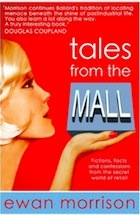
Opening with a horrible Star Wars/Somebody That I Used to Know YouTube clip, one of the many thousands that appear when you search for 'parody', author Ewan Morrison set out to convince us that parody has gone too far in the digital age and lost any power it had ever had. "Parody is an overly familiar form and no longer effective". The problem, as he sees it, is that "everybody has an abundance of spare time". People take to the Internet to create mash-ups or fan-fic rather than interacting constructively with the rest of the world, and as a result "mass media is just talking to itself", like Twilight breading Fifty Shades of Grey. Where parody may once have combined the humour and political drive that Martin Rowson suggests, today they have "fallen away". 

"We are becoming a world of domestic parodists, spending our vital forces parodying and not doing anything in the real world".

From political cartoons to South Park, if we laugh at everything indiscriminantly then parody becomes obsolete, no longer a political tool but mere entertainment. Citing David Foster Wallace, Ewan insisted that we must "go back to being sincere". "We should stop thinking politics is funny. It's not. The cathartic function of parody is a problem". 

As you can imagine, David and Martin were quick to defend the types of parodies they work with, but there was unanimous agreement that this "domestic parodying" is unproductive and, often, frankly terrible. This left all sorts of questions discussed but unresolved: should parody be judged on its aesthetic quality? Its ability to make us laugh? Its political effect? Is there any point to parody any more? 

The event should hopefully be released as a podcast. Stay tuned to LSE's podcast page.