Showing posts with label theatre. Show all posts

Tuesday, 27 October 2015

Fabrication: KCL Arts & Humanities Festival 2015

Given that I started my PhD writing about the KCL Arts and Humanities Festival, it seems only fitting that I end in the same way. This year's theme is Fabrication. As usual, it's a broad theme, ambiguous enough to allow King's staff and students to shoehorn in their wide range of interests, but - to the joy of my inner five year old - staff from the Spanish, Portuguese and Latin American Studies department took it literally and got us engaging in arts and crafts.


Fabricating Across the Atlantic


My beloved supervisors, Professor Catherine Boyle and Dr Elisa Sampson Vera Tudela, decided to celebrate the Andean tradition of making arpilleras, small tapestries sewn onto sacks, which have been used for decades as a form of protest or a way to share life stories. Chilean Human Rights advocate and researcher Roberta Bacic curated an exhibition of arpilleras from Chile, Argentina and Peru, with narratives of dictatorship, strikes, or making a stand against domestic abuse. Also on display was an arpillera created by Chilean exiles in Sheffield and South Yorkshire, telling the story of how they had started a new life.


Catherine and Elisa wanted to take the festival as an opportunity not only to display arpilleras but to consider how they can be understood in and adapted to our own context. They asked: 'What does it mean to tell our own stories of here and now in a city of movement and transition like London, through a creative form borrowed from elsewhere?'


To answer that question, they turned the Council Room of KCL into an arpillera workshop, led by artist Linda Adams who, inspired by the Andean example, explores political themes through tapestry. Armed with thread, fabrics, paper templates and PVA glue, we were challenged to make a collective tapestry narrating our own experience of London. Naturally, I made myself dancing.


The day ended in a dramatised reading of Tres Marias y una Rosa, a Chilean play by David Benavente and Taller de Investigación Teatral depicting an arpillera workshop. The four women of the title discuss their financial and marital struggles as they make arpilleras for export, the only way for them to support themselves and their families. Catherine had worked with the Head For Heights Theatre Company in a mixture of translation and devising to make the play work and resonate in an English context. While we had been busy cutting and sticking, Catherine, director Karen Morash and four very brave actresses spent the afternoon locked away rehearsing. After only a matter of hours with the play, they put on an incredibly engaging performance. I was surprised to learn that the original play had been written in 1979 as the frank discussions between the women and their struggles to support their families through economic crisis are just as relevant today.

Translation games: weaving translation into a poetic collage

I've been a fan of Translation Games since it launched in 2013, to the point where I invited the organiser Dr Ricarda Vidal to introduce her fascinating project at the Migrating Texts colloquium last year. Translation Games plays with translation across not only different languages but different media in a ‘public-facing programme of ludic workshops’. The project employs the arts to make languages interesting for the general public, while at the same time trying to discover whether there is an ‘essence’ of a text which carries through different media.

As Ricarda explained, Translation Games began with a project called What We Made in which a short narrative text commissioned from the American Colleen Becker was translated in a sort of telephone game from English to French to Italian and so on. Each translator only had access to the previous step, although the text was also translated back into English at every stage. At the same time, the text was translated from writing to film to ceramics to an audiovisual piece and finally to choreography, and simultaneously from text to textile. Translation Games has since run further projects, including translation from poetry to scents, and a challenge for students and artists to translate a photographic version of a poem by the Serbian Vasko Popa into an English poem.

My favourite Spaniard Dr Maria-José Blanco has now joined Ricarda and thanks to an AHRC grant the pair organised a translation train beginning with the poem Still by Denise Riley, through 12 artists, each using a medium of their choice. They then set a competition to translate the final image back into poetry. The original poem, 12 images and the winning poetry translation can be seen here. One of the artists, Sarah Sparkes (whose playful musings on death and the afterlife I was first introduced to at the launch of Ricarda and Maria-José's book The Power of Death), also teaches classes at the Tate on paper engineering, and so it was decided that participants at the Fabrication event would be challenged to translate one of the poems or the images into a paper structure.


After practising different cuts and folds, I chose the last image in the chain by Domingo Martinez to translate into paper. Although I had a great time cutting, sticking and drawing with ink, I did also reflect seriously on what were the key aspects of the image which gave it its meaning: the colours, the contrast between dark and light, the layering and the image of one hand grasping another.


At the end of the day, all the translations were sewn to canvas to be displayed in KCL. As you can see below, we each had very different ideas, which demonstrates the impact of the personality and interests of the translator on their output, but we still found elements in each of them which convey the meaning of the original poem.


This is just a tiny part of a packed two weeks of festival. For the highlights, check out King's Arts and Humanities' Storify.

Sunday, 3 November 2013

Theatre Royal Bath Summer Season - Candida and King Lear

It was another exciting summer in the Social Programme Office at the University of Bath's English Language Centre - so much so that I feel like I'm only just recovering from it now! Like last year, I was lucky enough to meet some wonderful people from all over the world and enjoy sharing British culture and landmarks with them. One particular highlight for me was being able to take my students to the beautiful Theatre Royal twice this summer, even if I was underwhelmed by the two very different plays themselves: George Bernard Shaw's Candida and Shakespeare's King Lear.

Candida

Although in recent years it has been eclipsed by Shaw's triumph Pygmalion, Candida (1898) was quite the hit in its day, questioning Victorian ideas about love and marriage with a side order of socialism. The play centres around a love triangle: popular priest and orator, Reverend James Mavor Morell (Jamie Parker), whose seemingly perfect live unravels when a young poet who he had taken pity on (Eugene Marchbanks, played by Frank Dillane) arrives and announces that he is in love with James' beautiful young wife Candida (Charity Wakefield). While considerations of the practicalities of socialism rumble in the background, most of the action is the conflict between the two males, making it clear that neither affords Candida any agency in her own love life. The most interesting part of the play for me, therefore, was how Candida deals with this situation, eventually resisting the Victorian ideal of female passivity that both men unwittingly force upon her.

I expressed concerns about Jamie Parker in my review of Henry V and his performance in Candida left me with similar doubts. I can't work out if he's just a boring actor, or whether he is intentionally accentuating the staid nature of the character, making it clear why Candida might seek entertainment elsewhere. By contrast, Dillane (famous for playing Tom Riddle in Harry Potter), was very full on, to the point of being highly irritating at times, but it worked for the nervous, conflicted young poet. Of the main cast, I was most impressed with Charity Wakefield's (Land Fothergill from Any Human Heart) sensitive portrayal of the title character. Overall, Candida was at turns funny and thought provoking, but lacking the spark that makes Pygmalion such an enduring hit.

King Lear

Regular readers will know that I'm quite familiar with King Lear after following Cardiff University's Act One as they took their adaptation to Edinburgh. However, my students were happy to learn that even I struggled to follow every word of this incredibly dense tragedy. The main attraction for this particular adaptation was David Haig (Four Weddings and a Funeral) in the title role. The dramatic weight of the role was quite a departure from Haig's usual comedic roles, and at times he seemed to struggle with it - just one of the many let-downs of this production. A particular strength of King Lear is how the universal themes of greed and ambition can be adapted to an enormous range of settings, but for me the 1960s East End gangsters premise which had seemed so promising just didn't pay off. There were some strong performances and the notoriously difficult eye-gouging scene was impressively depraved and gory, but at a certain point the production just seemed to lose its way. Rather than the emotional punch the end is supposed to provide, this Lear's eventual denouement left us feeling only relief.

Find out more about the Theatre Royal and their upcoming attractions here.

Tuesday, 18 June 2013

A Little Night Music In Concert

I was confused by A Little Night Music at first. Not by the plot - a delightfully simple tale of marraige, infidelity and finding a happy ending - but by how and why such a stellar cast were performing together for one night only in Guildford. It was only when I read the programme after that I realised the debt that we as an audience owe to the producer/musical director  Alex Parker (@alexparker91 on Twitter), who is lucky enough to live the theatre-goer's dream: gathering your favourite cast and putting on a classic, under-appreciated show. I know I would do the same given half the chance!

A recent BMus graduate, Alex has achieved a remarkable amount for someone so young, working on a wide range of productions, including, most recently, The Pajama Game. As a result, he has put together an enviable little black book, which he put to excellent use in A Little Night Music. I realise I'm prone to hyperbole when it comes to blogging about musicals, but when I say stellar in this case I really mean it: Janie Dee (Desirée Armfeldt) and Joanna Riding (Countess Charlotte Malcolm) are both double Olivier award winners, Anne O'Byrne (Anne Egerman) recently starred as Christine in the DVD of Love Never Dies, Fra Fee (Henrick Egerman) is fresh from the barricades of the Les Mis film, and the entire cast have a long and impressive list of stage and screen credits to their name. This concert version - no props, no costumes, and scripts still in hand - displayed just why this cast are so successful. Their vocal and acting performances were strong enough to completely envelope us in the production, to make us laugh out loud or marvel at their singing abilities, without any of the usual accompanimients to a musical of this scale.

Of course, the cast are helped by the material they're given to perform, and A Little Night Music certainly lends itself to a concert version. Essentially the story of a handful of characters in one location over one weekend, the show relies on Sondheim's music and lyrics, which at 40 years old, are as fresh and captivating as ever. With the Menier Chocolate Factory version of Merrily We Roll Along finally bringing Sondheim's classic the acclaim it deserves in the West End, and the Chichester production of Sweeney Todd cleaning up at this year's Oliviers, Sondheim's work is once again proving its enduring worth.

My last brush with Sondheim was the new, fully orchestrated version of Sunday in the Park with George staring Julian Ovenden at Theatre du Chatelet, which I had to listen to on the radio (thank you France Culture) as the ticket price and a trip to France was a bit steep even for an obsessive like me. While there are some great songs (like Move On, which you can watch here), they are interspersed with far too much dialogue. I realise Sondheim wanted to make a point about the nature of art, especially after the original production of Merrily had just flopped, but Sunday just left me cold. Thankfully, A Little Night Music couldn't be further from Sunday. It's HILARIOUS, stuffed full of laugh out loud moments. It's also filthy, opening with a song in which Frederick (David Birrell) considers ways to get his wife of 11-months to finally sleep with him, and continuing in a similar fashion. Yet somehow at the same time, there are incredibly moving moments, full of Sondheim's trademark wry observations on human failings in relationships.

As well as the cast, Parker's concert benefitted from a 31 piece on-stage orchestra who really made the most of the score, full of 3/4 time waltzs. Apart from the ubiquituous Send in the Clowns, the songs from A Little Night Music are not well known, but they should be. Every Day A Little Death, the lament of the cheated yet loyal wife, is one of Sondheim's most heartbreaking ballads, while perhaps the most rousing first act closer ever (though Les Mis fans may disagree with me), A Weekend in the Country, is so catchy that it's been stuck in my head on and off for the last three years now, since I first watched the incredible Stephen Sondheim 80th birthday prom in 2010. 


Alex Parker states that his aim is to produce the highest quality short runs and one-off productions that everyone will be talking about for a long time after. He certainly achieved that with A Little Night Music. I can't wait to see what he comes up with next!

Wednesday, 12 June 2013

Stupid F*@#ing Bird @ Woolly Mammoth, Washington DC

-          “Is that a seagull?”                                
-          “It’s just a bird. A stupid fucking bird”.

After the thoroughly traditional Newsies on Broadway, I was ready for something a bit more transgressive when I reached D.C. As the title would suggest, Stupid Fucking Bird, Aaron Posner's postmodern take on Chekhov’s The Seagull, certainly didn’t disappoint.


The enormous Latin American Studies Association Conference didn’t leave me with a huge amount of free time to explore D.C., so it was sheer luck that on my – rather long! – walk from the National Gallery of Art to the conference I happened to walk past the Woolly Mammoth Theatre Company and their rather eye-catching posters for their latest production.

You’d be forgiven for guessing from the poster that the play is about Twitter. It’s actually far more interesting and original than that, but social media does have a very important presence in the lobby (see #sfl). With ‘Pinspiration stations’ and tweets projected onto the walls, the audience are encouraged to interact with both the text of the original play and the very idea of art.


The play itself questions the form and purpose of theatre just as Chekhov had done with his original over a century before, while bringing Chekhov's famous subtext out into the open. It is self-reflexive, self-referential, and completely breaks the fourth wall, frequently addressing the audience for input. Further nods to Chekhov include a small pile of leaves hinting at the bucolic setting of his plays, and Banksy style mural of the great Russian playwright on the back wall.


Just like Chekhov's Konstantin, the main character Conrad (Brad Koed) expresses his belief that theatre – at least in Eastern Europe in the late 19th century  - used to have the power to change society. ‘Why would you want to change the world?’ asks Dev (Darius Pierce), the most grounded character in the production.  The question, like the production as a whole, makes us consider what we, as an audience, want to get out of the theatre. While Stupid Fucking Bird won't change the world, it did give me everything I want from a play. Despite the distancing effect of all this experimentation with form, there are still moments when the audience completely lose ourselves in the play; there is shock, happiness, despair and a whole lot of laughs, interlaced with really thought-provoking moments. I was incredibly impressed that one production could have so many different effects on me. Since I saw the production, on the second night of previews, it has unsurprisingly garnered rave reviews.


I later learned that Woolly Mammoth is just one of a host of new experimental theatres that have popped up in D.C. in recent years. Apparently new zoning laws make it far more economically beneficial for developers to turn the first few floors of their new buildings into public arts spaces. If the quality of productions at Woolly Mammoth is anything to judge by, it would seem this law is paving the way for a new wave of exciting, experimental theatre in D.C. It makes me wish the city weren't quite so far away!  

Stupid Fucking Bird runs at Woolly Mammoth Theatre Co, Washington D.C. until June 23 2013. Full information and tickets are available here.

Monday, 10 June 2013

Newsies on Broadway

Now is the time to seize the day!  - Newsies.

The last (and first) time I visited New York, my one regret was not having seen a show on Broadway, so when I knew I would have an evening in the Big Apple before heading to Washington for the Latin American Studies Association Conference, I only had one objective, and this song from Smash on repeat in my head: Broadway Here I Come!


One of my main aims was seeing a show that I couldn't see in the West End, as there is a particularly high level of cross-over at the moment. There was certainly a range of shows on offer...


However, one thing I learned about Broadway is that the vast majority of shows are closed on a Monday. That ruled out the spangly new circus version of Pippin, last night's Tony champion Kinky Boots and even the 'so bad it's hilarious' spectacle of Spider Man: Turn off the Dark. Nonetheless, there was one homegrown hit I hadn't had a chance to see in London yet open on a Monday night, Newsies.


The second thing I learned about Broadway is it's WAY more expensive than the West End, and that's saying something given that a stalls seat here will often set you back at least £60. For Newsies, I was offered the choice between $140 for a seat or $30 to stand. Despite having woken up nearly 24 hours earlier and travelled half way across the world, you can guess which option I chose!


My prior knowledge of Newsies was pretty much limited to Kurt mentioning the twirly jumpy dance move that dominates the production in Glee and knowing that it was the show that launched the career of Smash star Jeremy Jordan (singing Santa Fe below). It turns out that the show is a remake of a 1992 Disney film about the newspaper boys whose strike brought down Joseph Pulitzer himself. The original, starring a young Christian Bale, was a box office disaster but became a cult classic.


Newsies prides itself on its Tony-winning choreography, and it certainly is impressive, if repetitive. Those boys are strong and skilled at doing multiple leapy twirly things without getting dizzy! The story is fun, and the historical achievement of the newspaper boys is actually quite inspiring, but the show is almost painfully sweet (it is a Disney production after all). Musically, you could tell straight away it was Alan Menken; although not his best work, it does boast a couple of incredibly catchy tunes (Seize the Day was still rolling around in my head over a week later). My main disappointment, however, was the cast, who were almost entirely Broadway newbies. They could certainly dance, but their voices were weak and often overpowered by the music. While star Corey Cott has the look and charm for newly appointed Union Leader Jack Kelly, having heard Jordan's version, I couldn't help feeling cheated.

Choreography photographed by the NY Times

Besides the show, I was interested in seeing the differences between Broadway and the West End. The stereotype seemed to be true: Broadway fans are more vocal in their appreciation, giving huge cheers after every song, while West End audiences have to work harder for far more tempered applause. I was also amused that Annoying Actor Friend's spoof bios are so accurate; everyone really did thank Telsey and quote Bible verses!


Overall, I'm very glad I saw Newsies! if mainly for the experience of a Broadway show, but it certainly didn't seem worth the extortionate amount they charged for full price tickets. I wouldn't rush to see it when it (according to Baz Bamigboye) transfers to the West End in 2014.

Thursday, 9 May 2013

Kiss Me Kate @ Old Vic

When I first heard about the new production of Kiss Me Kate at the Old Vic, directed by Trevor Nunn and with a stellar cast, I knew I couldn't miss it. And yet with one thing or another it suddenly came to four days before closing night. Through a real stroke of luck I managed to get a last-minute ticket, and thanks to the Old Vic's fantastic £12 for under 25s ticket offer, I got spectacular value for money.

Cole Porter's classic 1948 backstage comedy is bursting with ridiculously catchy hit songs, from Another Op'ning, Another Show, So In Love and Too Darn Hot. Sam and Bella Spewack's book is also incredibly funny. It's no surprise then that, since winning the first Tony Award for Best Musical in 1949, the show has frequently been revived on Broadway and in the West End, as well as being adapted to film in 1953. In 2003, Great Performances broadcast a London revival production starring Brent Barrett and Rachel York, which had since then been my definitive Kiss Me Kate.

Nunn had his work cut out to put his own stamp on this musical, then, but he certainly succeeded. Starting life as the triumph of the 2012 Chichester Festival season, the new production won critically acclaim above all for its completely reinvented, high energy dance routines from Chichester Festival Theatre's resident choreographer Stephen Mear. The monochrome costumes and set-design for the show-within-a-show Taming of the Shrew sections was a particularly striking choice, marking a clear distinction between the two sides of the show (and looking really classy at the same time). Turning Always True to You in My Fashion into a duet was a bold choice that really worked and brought new meaning from an otherwise overly familiar song. It is the stellar cast, however, who really deserve the credit for the incredible success of this new production. Multi-award winner Hannah Waddingham and Alex Bourne sizzled as Hollywood star Lilli Vannesi/Katherine and her ex-husband, director and verbal sparing partner Fred Graham/Petruchio, showing off both really powerful voices and comic talent, while Adam Garcia (of Coyote Ugly and Got to Dance fame) wowed us with his breathtaking dancingas Bill Calhoun/Lucentio.

According to Nunn, this production has been a very long time coming. It was certainly worth the wait.

Monday, 22 April 2013

A Chorus Line - London Revival

For a long time now, my friend Zoe and I have been saying we should make the most of living in London by going to the West End one night and just asking for day tickets at every theatre we come across until we succeed. On Wednesday, we finally took up the challenge.

The quiet before the storm of tourists at The Book of Mormon
First stop was The Book of Mormon, for their ticket lottery. Two and a half hours before the show starts, you can enter a ballot for up to two front of stalls tickets for £20 each. Unfortunately, at least 100 other people had the same idea (it helps that the Prince of Wales theatre is directly between Piccadilly Circus and Leicester Square and - just like real Mormons - they send Elders out to recruit people). Undeterred, I ran down Regent St to the London Palladium where A Chorus Line is having its first major London revival since it opened here in 1976. I'd been meaning to see the show since it opened in February, and was extremely happy to find front of stalls day tickets for just £19.50 each.


As regular readers will know, I'm fascinated by dance, which is one of the major draws of A Chorus Line. As you would expect from a show about dancers, the dancing is spectacular, so intensely physical it left me in awe of the performers strength and stamina. It was a real joy to see these iconic dance pieces performed by some of the most talented performers in the West End at the moment, including John Partridge (who despite being more commonly known as an Eastenders heart-throb has been staring in musicals since he was just 16) as director-choreographer Zach, Scarlett Strallen as down-on-her-luck but still desperate to dance Cassie, and Leigh Zimmerman, Olivier nominated for her role as the ageing but brazen Sheila.


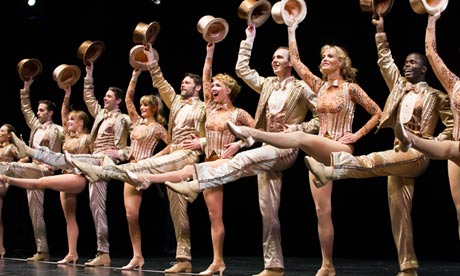
However, A Chorus Line is more than just dance. Directed by original choreographer Bob Avian, the revival stays true to the unique genius of Michael Bennett's original production. A character piece inspired by interviews with real-life chorus members, the show introduces each of the auditionees for a spot in the chorus of an unnamed musical through a skilful weaving together of speech, song, dance, movement and lighting that results in 15 minute long pieces like 'Hello Twelve, Hello Thirteen, Hello Love' which revolutionised the shape of Broadway productions back in the 70s. The result is a frenetic and constantly engaging show, which slows only for the musically stand out number What I Did For Love, beautifully sung by Victoria Hamilton-Barritt as Diana, before culminating in the show-stopping, and incredibly sparkly, One (Singular Senstation). I left with a huge smile on my face and the urge to dance my way back down Regent St.


A Chorus Line is currently booking at the London Palladium until January 2014. Find out more at http://www.achoruslinelondon.com/

Tuesday, 2 April 2013

Once - London Opening Night

I don't know you but I want you all the more for that... 
- Falling Slowly, Glen Hansard and Markéta Irglová


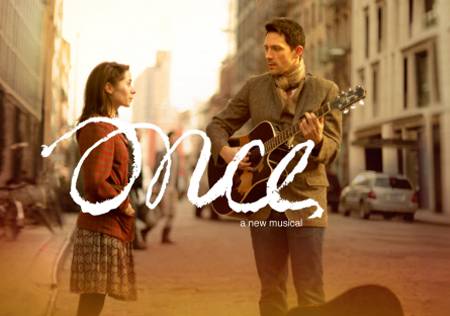
Once began life in 2006 as John Carney's small indie film, staring Glen Hansard and Markéta Irglová, made in Dublin for $160,000. It went on to make nearly $21 million at the box office, and win an Oscar for Best Original Song for Falling Slowly. This unprecedented success led to a Broadway musical adaptation by Enda Walsh, which opened at the end of 2011 and won 8 Tony Awards. Now Once comes to London, and I was lucky enough to attend the opening night of previews.

Once is the story of an extremely talented but disillusioned Irish musician who gets a new leash of life after a chance encounter with a Czech piano player. Together they gather an unlikely gang of misfits to make music, while romance bubbles away under the surface. Walsh has rounded out the story in bringing it to the stage and added a large dose of humour, but the feel of the original, a very true and delicate love story without the clichés, has retained all its charm.

The Broadway cast at the 2012 Tony's.

In moving from screen to stage, Once hasn't given in to the trappings of a typical musical, but instead kept the beautiful music by Glen Hansard and Markéta Irglova that was at the heart of the film, becoming the first ever folk musical (that I know of anyway). It's a high energy show, but instead of chorus lines and high kicks the excitement comes from instruments being played live on stage, complete with lots of stomping. Once must have been extremely difficult to cast as everyone must both be able to act and to play typical folk instruments. At the heart of Once is Declan Bennett as the unnamed Guy, a singer-songwriter himself, whose deep and powerful voice is the focal point of the show. It's no surprise that the part has no understudy, without an incredible voice at its center, the show would not work.

Combining the simple, unconventional yet deeply moving story and beautiful music of the original film, with the joy of watching live performances, Once has an incredibly wide appeal and will no doubt enjoy as much success here as it does across the pond. As soon as the first performance finished, the whole crowd jumped up into a well-deserved standing ovation, and it was really touching to see how moved the cast were by this initial response. I predict a similar reaction every night.

To find out more about Once and book tickets, visit www.oncemusical.co.uk

Monday, 11 March 2013

Coalition @ Pleasance Theatre

Having voted Lib Dem at the last election, I have a tiny share in the responsibility for the coalition that is torn to shreds in Robert Khan and Tom Salinsky's new comedy play, which finished its run at the Pleasance Theatre this weekend. Whatever your thoughts on the coalition politically, there's no denying its comic potential.


The first term of the coalition is drawing to an end, and somehow they've made it through. Before the next general election, Liberal Democrat leader and Deputy Prime Minister Matt Cooper (Thom Tuck) - Nick Clegg in all but name - is determined to get himself out from the Prime Minister's shadow and assert his authority. The result, through increasingly complicated layers of bartering and betrayal - of people and of principles - is a rapid downward spiral of defections and defeats.

Thom Tuck as Lib Dem Leader and Deputy PM Matt Cooper
Weaving together the political (particularly criticism of the Liberal Democrat's supposed sacrifice of everything they believe in for power) and the comedic, Coalition takes us through the nightmare of constituency surgeries, appeasing back-benchers, fielding incompetent candidates in by-elections and facing the constant glare of public opinion (as compiled and analysed by a blithering PR geek). 

An unnerving Phil Jupitus as Sir Francis Whitford
While the coalition power plays are inherently funny, it's the cast who really make the play. Thom Tuck displays great physical humour as a man on the edge, all fists pumping and eyes bulging. As Sir Francis Whitford, whose only role in cabinet seems to be turning up mysteriously and messing with Liberal Democrat minds, Phil Jupitus was really quite unnerving.  He played everything so drily, recalling real life politicians who don't realise how unwittingly funny they are. Jupitus was not the only famous comedian on stage; equally dry-witted Jo Caulfield played Chief Whip Angela Hornby, who wasn't nearly as dominatrix-y as her job title would suggest, and a little unconvincing as someone in such a position of power, but still amusing.

Jo Caulfield as Lib Dem Chief Whip Angela Hornby
Although Coalition's primary purpose is to make you laugh, the play does prompt questioning of contemporary politics, and we all left discussing how the coalition will really end. My lasting impression of Coalition was that the exercise of power is far more trouble than its worth... but I guess that's why I'm not in politics!

Friday, 21 December 2012

Anne Chmelewsky on Through the Looking Screen @ RADAR2012

In Through the Looking Screen we meet Annabel Clarke, a shy young woman who creates a much more confident, 'popular' persona online, and stalks the man she likes on Facebook rather than talking to him in real life. It's a story that will surely be very familiar to many people today, but what makes Anne Chmelewsky's production stand out is that this thoroughly modern tale is the basis of a comic opera. The juxtaposition of new and old is striking, adding an extra layer of laughs as Clare Presland lends her stunning opera voice to phrases like 'Angry Birds, Words With Friends...'. 

Clare Presland as Annabel Clarke, with Elizabeth Challenger on piano
Anne is no stranger to experimenting with opera, having written The Office: The Opera for Comic Relief in 2009, but she admits that it is still a challenge to convince audiences that opera isn't old-fashioned and boring. I spoke with her about those issues, her inspiration and advice for fellow creatives before the show.

Firstly, I asked Anne how she came up with the idea to mix the very new and modern concept of social networking with the traditional form of comic opera. She explained that while at college she wrote The Office: The Opera not aiming to make opera accessible, but just to make it funny. "Talking about staplers and photocopying is just funny if it's sung". As that show was a success, Anne thought she would write another one. "I have a friend who was an amazing opera singer [Presland], who I knew would be really funny in a one-woman show", she explains, adding that the subject of online dating and social networks came from her part-time job in recruitment, where many people in the office spend all day attached to their online profiles. 

"People who are creatives use Facebook, Twitter etc for our work but we forget - not to generalise - how much people in offices use that stuff, to the point where I've seen people - without naming any names! - who meet people on nights out and then Google them the next day and are like 'Ooo, I don't know...', and really trust what they see on the web. The idea was to come up with a character who was totally larger than life, totally into all that stuff, and who trusted what was on the internet more than her own instincts".

When it comes to herself though, Anne isn't a social media addict - unless she has a show to promote of course, like most people in today's theatre industry. The show illustrates how social media is changing the way we interact, and Anne notices this not only in the dating world, but in the arts. She admits it is very easy to become jealous or insecure as people constantly tweet all of their successes and positive reviews, while censuring anything bad. It's important for creatives to remember that Twitter doesn't present the whole truth and not judge themselves accordingly.

Surprisingly, Anne was never a fan of opera, or even musicals, until she began studying opera at music college. Instead, her background is in writing film scores, which is a completely different process, with much less creative freedom. It wasn't until she lived with Clare Presland and began attending her performances, that she really got into opera.

"When I wrote The Office: The Opera, it was as a slight rejection of opera that was too elitist, but that actually got me to watch a lot more opera, and I realised that actually opera is really cool. It's just that sadly sometimes it is performed in places where the seats are too expensive and people can't afford to go, so people have got this view of it as really horrible, and a really unnatural way of singing. But actually, if you go to watch an opera, even if you don't like the story, the singing is always incredible".

Anne explains that her inspiration comes from the masters of operetta, Gilbert and Sullivan, while the score contains a lot of pastiche of classic works. "Musically, it's very traditional", but it is that juxtaposition with the subject material which makes the show work.

While Anne had never had any problems convincing musically-minded friends to attend the show in London, she was shocked by the resistance to her work at Edinburgh Festival. "I'd go and give out flyers to people saying 'It's a one woman comedy about online dating', and they'd say 'Yeah, cool!', until they'd see that it was an opera and be like 'Take your flyer back!'". She had to make a real statement, dressing up in a wedding dress as a desperate dater, to convince potential audiences that her show would be funny and worth seeing. She explains that often people would say they didn't like opera but when asked which operas they didn't like it would transpire that they had never seen any. However, she is positive about the future, with moves like ENO and the Royal Opera House selling cheaper tickets or posting online trailers encouraging new audiences to discover opera for the first time. "People still think you have to wear a ball gown and your seat will cost £150, but it's not true any more". 

Anne did everything herself for this show: story, libretto, music, direction, even stage managing and lighting. Writing modern comic operas seems to be quite a lonely experience at the moment, and Anne wishes that there were more people doing it so they could have "a little collective" who battle against the opera stereotypes together. She has more ideas up her sleeves for future shows though, even if she has to do them alone. However, she is very conscious of falling into the trap of thinking "This is funny because people are singing it in opera voice"; it is essential that her material is funny on its own and not just because of the juxtaposition between opera and real life. While she'd love to find a more experienced librettist to collaborate with, to create a really tight, funny libretto, she realises that in the current climate of limited budgets and  scarce funding, you have to take on every role yourself to just get your show out there, until you can afford more professionals. 

"Sometimes people say 'I really want to be a writer but I'm not sure if I'd find a director, a designer, a stage manager...', that kind of thing. Well, you know what, why don't you do all that stuff yourself to start with, to show your work off. You might even discover a new talent. I've discovered I'm quite good at stage managing - that could be a second career!"

Through Anne's dedication and willingness to all the work herself, as well as a heap of talent, Through the Looking Screen was eventually a success in Edinburgh and drew rapturous applause at the Bush Theatre. Anne says she hopes the show will have a run in the new year, but it depends whether she can convince  more people that a modern comic opera is worth seeing. The audience at RADAR definitely believe that it is.

Tuesday, 4 December 2012

British Tea Party + Round'ere @ RADAR2012

My favourite part of what I saw of RADAR2012 was Thursday's sneak peek, bringing two of the highlights of the last Bush Bounce, Hollie McNish and Katherine Pearce, back to the Bush stage to astound us with the power and beauty of words.

British Tea Party


Hollie McNish is more used to performing in pubs, clubs or tea-rooms, where she serves up poems with tea and cake, than theatres. However, her dramatic poems seem perfectly at home on the stage. I'm not usually a big fan of poetry readings, but Hollie gives a real performance, bringing every word to life and reading with all the force and emotion that went into writing them.

This selection of poems are all related to tea in some way, but they are by no means sweet and fluffy. Addressing British mores, fears and loves, Hollie's poems have a particular focus on questions of immigration and colonial history, urging us to be welcoming and accepting, and reminding us that nothing is pure. Hollie also condones the desire to sexualise children by making grown women dress up in school uniforms and eat cupcakes. "I'm proud to be a woman", Hollie affirms, and we all cheer. In all of her poems, Hollie speaks so much sense, and the fact that she does it with such artful words and rhymes is all the more impressive.

You can listen to Hollie's poetry here.

Round'ere


Katherine Pearce is a familiar face to me from the Royal Welsh College of Music and Drama. Ever since I first saw her in O Go My Man I knew she was a talented actress, with an incredible warmth, but I wasn't prepared for the force of her writing. 

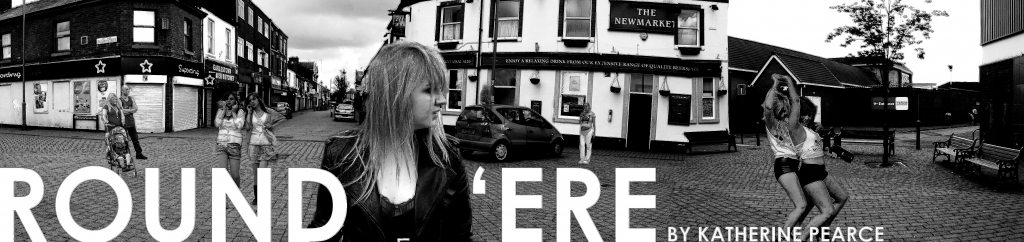
Round'ere is a touching, personal, portrait of North West England: prejudice, lack of opportunities, and hatred of Thatcher, contrasted with the creative wealth of the region. Katherine fired words out like a slap in the face but with such hypnotising rhythm that it was easy to get lost in them. The aesthetic quality of Katherine's poetry is in striking juxtaposition to the sorry state of a vulnerable young woman alone on a park bench. Just beautiful.

Katherine is busy filming with the BBC and will be at the National Theatre in January for Simon Stephen's Port. I look forward to seeing a lot more from her soon.

Monday, 19 November 2012

MONEY the Game Show Sneak Peek @ RADAR2012

There are cups of Quality Street lining the sides of the Bush Theatre stage as we enter. Murmurs of excitement and sideways glances at the chocolatey treats. This is going to be interesting...


MONEY the Game Show is the latest co-production between the Bush Theatre and Unlimited Theatre, written and directed by Clare Duffy. The project began life in April this year as part of the Platform 18: New Directions Award, through which Clare won £6,000 - enough to pay for three weeks of rehearsal and two weeks of performances. The whole process made Clare think about the value of money, which fed into her preoccupation with the financial crisis that began in 2008. Now, a redeveloped, rewritten - and more expensive! - version will hit the Bush stage from 31 January to 2 March 2013.

As part of the Bush Theatre's aim to 'demystify the theatre', the audience at RADAR2012 were invited to take part in a game that captures the 'spirit of the show', giving us the chance to directly influence the development of the final piece. We got to learn about hedge-fund managing in what turned out to be the most fun economics lesson imaginable. Split into two teams, we 'went long' on our volunteer blowing up a balloon quicker than our opponents, 'went short' on our balloon bursting first (betting on failure) and 'hedged' choosing between success for small rewards or failure for large rewards. With chocolate at stake, we quickly became greedy. We swapped edible wealth for moral bankruptcy, happily betting on the failure of the Euro leading to massive death and destruction while planning how we would enjoy our riches in Brazil. The final show will have a similar structure: the audience will become contestants, split into two teams led by ex-hedgefund managers turned performance artists. Only this time, there will be more at stake, because the losing manager will kill himself at the end of the show. How will greed and and ethics mix then?

After the sneak peek, Unlimited Theatre launched their 'See Your Pound On Stage' programme. The stage will contain 10,000 real pound coins and they need to start collecting them somewhere! In exchange for our shiny coins, we got to become shareholders and once the production has finished a Extraordinary General Meeting will be held to vote on what to do with the money. Judging by the preliminary suggestions at the event, this will surely be a fascinating social experiment. Will we be greedy - holding a lottery giving one shareholder the chance to keep everything? Charitable - donating the money to a good cause? Arty -investing the money in a new play? Or sadists - gluing the money on the pavement and laughing at people trying to get at it? We'll find out in March!

Sunday, 18 November 2012

Chapel Street @ RADAR2012

Fresh from summer success at Edinburgh, Chapel Street burst on to the Bush stage in a frenzy of bubbles, neon wigs, squirty foam and mini-scooters. Luke Barnes new play is pure storytelling, bringing to life two engrossing characters, Joe and Kirsty, who collide on one extreme night out. It is a high octane piece, which made me feel as drunk as the young protagonists who rush about the stage recreating their respective sides of the story. It demands concentration to follow the two separate but converging strands, told in tandem and at high-speed, but the effort is worth the rewards. After initial confusion, I quickly became drawn in to their tale, eager to know where it was all rushing towards.


Ria Zmitrowicz (Kirsty) does a drunk 16 year old really well: arms waving furiously, chest stuck out and a voice between sing-song and whine. Young, naive and optimistic, she will do whatever it takes to go to university and get a better life, no matter what her teachers say. Joe (Theo Barklem-Biggs) is more laid-back, warm and sympathetic. He would be labelled as lazy scum by the Daily Mail and he knows it, but he is totally disillusioned. While he recognises that he should probably take a boring service job, he thinks that would be soul destroying and wishes he could really achieve something with his life.

While Chapel Street is commendable for these wholly convincing and honest young characters, what makes it so powerful is that key issues of contemporary society aren’t shoved in your face but emerge between the lines and bubble away in your subconscious. The protagonists' lives are bounded by enduring class prejudice, the shadow of war, paedophilia and teenage pregnancy, the true weight of which can’t be felt in their drunken state but lurks in the background. Weirdly, the result is a strange sense of optimism – no matter the obstacles, Kirsty and Joe’s energy cannot, will not, falter.

Thursday, 8 November 2012

Chewing Gum Dreams @ RADAR2012

Michaela Coel already has an extremely impressive CV. First known as a poet, then a singer and musician, she graduated from Guildhall School of Music and Drama just a few months ago, the recipient of a 2011 Laurence Olivier Award for Best Student Actress and heralded as a future star. It's no surprise then that her new monologue, Chewing Gum Dreams, was chosen to open RADAR2012.


Written by Coel and directed by Che Walker, Chewing Gum Dreams takes us into the life and thoughts of 14 year old Tracey. Stories of maths lessons, the number 67 bus and school-yard crushes are told in the same breath as domestic violence, threats of rape, and racial prejudice, reminding us that all of these are part of everyday life for Tracey. She is such a warm, fun and naively innocent character that it hurts to see her go through what she does, to suffer and then to carry on with a smile. Coel imbues Tracey with such energy and humour that sudden silence and stillness is intimidating and reinforces the gravity of the situations affecting Tracey.

Chewing Gum Dreams is an involving, intimate piece, which proves that theatre doesn't need epic drama, or expensive sets and costumes. With nothing but a chair, some UK garage, a handful of real life, every day experiences and a lot of heart, Coel thoroughly captivates the audience, makes us laugh, moves us, and challenges race and class preconceptions. In a recent blog post for the Bush Theatre (How do we imagine a more diverse and accessible theatrical landscape?), Coel argues that it is up to writers to create characters that people who don't usually go to the theatre can relate to. Through bringing under-represented characters and locations to the stage, Coel proves that this is not the threat to traditional theatre that some reactionaries would have us believe, but rather a source of absorbing characters and affecting situations, the key ingredients of any successful play.

Chewing Gum Dreams will be performed again on 12th Nov @ 9.15pm and 13th Nov @ 7.30pm, at The Bush Theatre. Click here for tickets and more information.

Welcome to RADAR 2012

It was with great excitement that I arrived at the Bush Theatre today for the launch of RADAR2012: Signals from the New Writing World, three weeks of new productions, sneak peeks of works in progress and discussion panels by industry experts. While I will be writing a 500 word round-up of the first few days for Ideas Mag, I'll also be covering everything in more detail here over the next few weeks.


Having never been to the Bush Theatre before (my only prior experience of Shepherd's Bush at all was the Cooper Temple Clause gig at the Empire in 2007), I was immediately struck by the feel of the space. Just over a year ago, the Bush Theatre moved to this beautiful brick building which had previously been the public library, whose easy, unpolished architecture seems the perfect setting for new writing. For the first time since I left Cardiff, I've found somewhere which makes me feel like Sherman Cymru and Chapter did; a place where theatre is relaxed and open, not something you go to see but a space to be part of a community, to take part in something.

It was very apt, then, that the evening began with a welcome from Madani Younis, Artistic Director of the Bush Theatre, which focused on the community around the theatre. Uxbridge Road is one of the longest in London, he told us, and along it you find just about every nationality, coming together in a vibrant multicultural community. At the heart of this community, was always the Old Library, located next to the large market. Built in 1895, the library was an integral part of community life, a democratic space, a place not just to discover the magic of reading, but to meet, to see and be seen. When the Bush Theatre took over the building last year (moving from an 80-seater room above a pub where they were founded over 40 years ago), they inherited this commitment to the community and promised to make the theatre a place where local life and culture would be reflected.

Madani's presentation then went on to explain the desire to redefine the theatrical landscape which is at the heart of all the Bush Theatre's work, and the impetus behind RADAR. The festival is an occasion to share and discuss ideas with the public, to open up a debate on questions like how to develop a meaningful relationship with playwrights. This has been the topic of much consideration at the Bush Theatre recently. Previously, the theatre received around 2000 unsolicited plays ever year. Each of these was read and reviewed, but the conversion rate was just 0.1%. Surely there must be a better way to develop new talent? After consulting with many admired playwrights, directors and other theatre makers, Madani was very pleased to announce tonight that the unsolicited writing policy has been completely redesigned. The new policy aims to stimulate ideas, embrace talent and ultimately produce plays. In future, twice a year there will be three week windows for writers or companies to submit works. A selection of these will then benefit from expert mentoring and workshops, the best of which will then be offered seed commissions. At least one of these works per year will then be professionally staged at the Bush Theatre. At the heart of the new policy is a desire to develop, nurture, and create lasting links with a new generation of creatives. Full details will be released on 18 January 2013 and the first window will open in March.

As Madani looked forward to the exciting prospects of this new policy, he officially opened RADAR, beginning three weeks which will surely prove the power and possibilities of new writing, as well as questioning the way theatre is made and received. 

PS: I was also a little too impressed by the use of scripts as wallpaper in the bathrooms:


Wednesday, 31 October 2012

On My Way To RADAR 2012

Regular readers will know that I'm a huge fan of new writing. While I love a classic musical or a bit of Ibsen as much as the next person, nothing beats the excitement of seeing a work in gestation or witnessing for the first time pieces that challenge our preconceptions of what theatre is meant to be. So, when I saw IdeasTap where running a competition for a reporter for RADAR 2012 at The Bush Theatre, I jumped at the chance, and am very happy to say I won.


RADAR 2012: Signals from the new writing world, runs at The Bush Theatre in Shepherd's Bush from November 7-22, combining performances of new writing, sneak peeks of works in progress and provocative debates lead by theatre makers from across the industry. For the first week, I will be attending performances and talks, culminating in a 500 word round-up for IdeasMag. I can't wait! 

I'm very grateful to IdeasTap for this opportunity. IdeasTap is an arts charity set up to help 16 to 30 year olds across the UK get a start in the creative industries. They frequently offer funding and creative briefs, often working with top names like Sky Arts, The Barbican or the BBC, as well as maintaining a list of arts jobs currently recruiting. Whether you want to be a performer, an artist, a curator, a journalist, a technician, or a PR guru, if it's arts related, they'll help you find it. On top of that they run a magazine full of arts news, comment and advice for jobseekers, and provide space for the community of over 75,000 members to meet and collaborate. Find out more in this video:


Stay tuned for my RADAR reviews!

Friday, 26 October 2012

Finding Neverland - A New Musical @ Leicester Curve

Second star to the right, and straight on til morning, Neverland is waiting for you...


Genuinely new musicals - as opposed to revivals and jukebox musicals - are a rare treat these days, and rarer still is it to find one that unites such a talented cast and creative team. Finding Neverland, in previews at Leicester Curve from 22 September to 18 October, is just that - a musical so new, it's not even finished yet.

Harvey Weinstein is making his first foray into theatreland with a stage adaptation of the film his company, Miramax, produced in 2004, staring Johnny Depp as depressed play-write J.M. Barrie and Kate Winslet as the beguiling widow Sylvia Llewelyn Davies, the real life Wendy to his Peter Pan. The reviews (see The Guardian and The Telegraph for instance) all say more or less the same thing: while the cast are commendable, and the £7million staging is impressive, the story has gotten lost somewhere along its journey to the stage and the score isn't particularly stirring. While I loved the film, to be honest, I wasn't expecting too much from Finding Neverland beyond the pleasure of seeing Julian Ovenden again, so I was pleasantly surprised by the show.

This photo from The Telegraph highlights just how energetic Julian Ovenden is in Finding Neverland
I have to agree that Scott Frankel's music isn't particularly memorable, but it's not bad either, and works better in the context of the performance than in YouTube clips like the ones below. It also seemed that director Rob Ashford threw everything possible at the stage - from a real St Bernard to a giant pirate ship - to win over the audience, which was great fun but did appear to be covering the cracks in the story and the score. The ending, which in the film is so heartbreaking, had no power at all, perhaps in an attempt to make the show more family friendly.


I don't really care though, because I had a wonderful time at Finding Neverland. Julian - on stage for almost all of the two and a half hour long production - proves just how versatile he is, wowing the audience not only with his voice, but unwavering energy, swashbuckling, Scottish dancing, and being led in a tango by Captain Hook. Rosalie Craig, too, displayed an impressive voice, creating a very sympathetic Sylvia, while strong support came from Liz Robertson as her mother, Clare Foster as Barrie's wife, Mary and Oliver Boot as Hook/an unappreciative theatre critic. It's always a pleasure to watch such a talented cast, even if they aren't working with the most exciting material. 


Finding Neverland also benefited from musical direction by David Charles Abell, the man behind the baton at the opening of any good musical (you'd recognise him from the Les Misérables 10th and 25th anniversary concerts among many others). I was extremely excited to see him right in front of me, singing along enthusiastically throughout the show. I told him afterwards how I was a huge fan - I think he was surprised that anyone was a fan of conductors! Anyway, as well as being very polite, he told me that the production was evolving every day and would surely change significantly again before its eventual London opening. Given the money and powerful names behind Finding Neverland, I have no doubt that the  critics concerns will be addressed and the production will thrive in London.

After David, I put my fan-girl skills to even better use, spotting Julian just as he was about to escape from the theatre, and grabbed him for a hug and a photo. He was really lovely and I spent the rest of the day grinning idiotically. I'm so uncool. 

After all that effort on stage, Julian clearly needed a nap!
When Finding Neverland makes its inevitable transfer to London, I'll be there, hoping that the show will have found its spark along the way, just as J.M. Barrie did.